Dhaka
5:10 pm, Sunday, 20 September 2026

News Title :
News Title :

Knowledge-Based Society and Quality of Life

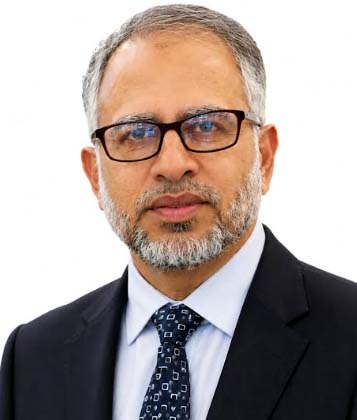
— Md. Zillur Rahman Chowdhury
- Update Time : 02:29:39 pm, Sunday, 28 June 2026
- / 215 Time View

Human beings are the finest of all creations. Everything else in creation is meant to fulfill human needs. Humans will utilize everything in creation for their own purposes. However, humans did not initially know the process of this utilization. This knowledge was divinely transmitted to mankind. The ultimate source of knowledge is the Almighty Creator. In these unknown matters, humans were profoundly helpless. Out of mercy and compassion for humanity, the Creator bestowed knowledge to alleviate that helplessness and set their lives in motion. This guidance is for human welfare because it outlines and sets the boundaries of what is permissible and what is prohibited. By adhering to it, humans benefit, remain safe, live happily, and achieve prosperity. Failure leads to harm, suffering, and the defeat of human life. This vast realm of guidance and knowledge in human life is an open field for study, contemplation, and research, which they will continuously acquire through practice for their own success.
Humans can neither create nor destroy anything. However, by acquiring knowledge, they can alter the time, location, and form of what already exists in nature. Human life is a continuous process of biological development, observation, realization, perception, and accumulation of experience. Humans acquire knowledge to know themselves, to realize the purpose of their creation, and to work for their own welfare, the welfare of others, and the building of a beautiful society.
Since their inception, humans have been thirsty for knowledge; their attempts to know are continuous, and their curiosity is endless. The realm of knowledge is infinite. The materials of this infinite realm of knowledge are scattered across nature and the countless signs of this universe, upon which humans continue to contemplate and research from various perspectives. Human life and actions can basically be explained from three viewpoints:
First, from a philosophical viewpoint: Life is about knowing oneself, self-realization, and an endless process of acquiring knowledge through which one seeks truth, develops latent talents, and enjoys life by living a moral life.
Second, from a scientific viewpoint: Life is a biological process of reproduction, growth, and adaptation to the environment. The role of humans is to understand this earth and the universe, make new discoveries, and contribute to the sustainable development of humanity and the planet.
Third, from a religious viewpoint: Life is a test from the Almighty Creator—a test of whether or not to obey His guidance. The duty of humans is to surrender completely to the Creator, understand His guidance, worship accordingly, earn His satisfaction, and prepare for success in both lives through the service of creation.
There is a fundamental alignment among these three viewpoints regarding human life and actions, specifically in the core areas of knowledge acquisition, life’s purpose, morality, values, honesty, justice, the pursuit of truth, discipline, order, philanthropy, and human welfare. Life is a priceless entity. All arrangements revolve around this life. From all ideologies or viewpoints, there is an unceasing, unerring effort by humans to make human life successful and to keep this society and this world safe and welfare-oriented.
Historical data shows that many societies and civilizations flourished by following the immutable laws that evolved from nature and society to make life and society beautiful and successful. Conversely, by violating these laws, many nations and civilizations in human history sank into the abyss of destruction. Human beings possess both humanity and animality. When animality dominates, humans transgress boundaries, leading to disaster in society. The destruction of nations like ‘Ad, Thamud, Lot, Madyan, and Pharaoh, as well as civilizations like Babylon and Rome, is noteworthy. The reasons for their downfall were oppression, arrogance, transgression, disobedience, obscenity, moral decay, irregularity, corruption, and social injustice. The Indus Valley Civilization was destroyed by Aryan invasions and climatic and environmental crises. Thus, it is evident that society and civilization must stand upon truth, justice, equity, fairness, and natural balance; otherwise, suffering and downfall are inevitable.
The responsibility of running a society or a country falls upon the political party in power, which formulates state policies and executes resource distribution. In a modern welfare state, the vow of politics is essentially the practice of the science and art of resolving disputes among all parties based on fairness and ensuring public welfare. The expectation is that through this practice, the government will establish good governance and justice by ensuring transparency and accountability in all its operations, thereby securing the rights, safety, and overall welfare of citizens’ lives.
Political ideologies exist both on the right and the left. However, even though their ideologies represent two different poles, it is not surprising that their ultimate goal is the same: to ensure the overall welfare and progress of the people of their country. This proves that the framework of guidance or legislation for running a society, country, or state—which has developed over time through values, truth, justice, and humanitarian standards for the sake of human welfare—is inviolable. If that legislation is not followed, downfall is inevitable. History bears witness to this.
What this legislation contains is a guideline for punishing the wicked and nurturing the righteous. It offers guidance to protect good governance, righteousness, equity, equality, fairness, and justice. To ensure the rights, security, and welfare of society and its people, it requires saying ‘no’ to all evils and crimes, and ‘yes’ to all good. According to this legislation, it is the welfare of the state to inflict appropriate punishment on criminals, discourage crime, and protect the innocent and the oppressed. If these principles of good governance, justice, and fairness are violated, that state is not a welfare state. Instead, misrule, injustice, oppression, discrimination, chaos, and ill-welfare will prevail there.
The Constitution of Bangladesh is a blend of rightist and leftist ideologies, aimed at achieving welfare by ensuring the rights and security of all people in the country. It also includes expressions of loyalty and faith in the Almighty Creator. Nationalism, democracy, socialism in terms of social justice, and secularism in terms of everyone’s right to practice religion—these four fundamental principles are a combination of various political ideologies of the country and a reflection of the aspirations of all citizens. Divine legislation says the same thing: loyalty to the Creator (the rights of the Creator) and human welfare (the rights of humans). Therefore, no matter how different political ideologies or models may be, the ultimate goal of all societies and states is humans and human welfare.
The core principles of the United Nations prioritize nine issues: participation, rule of law, transparency, responsiveness, consensus orientation, equity and inclusiveness, effectiveness and efficiency, accountability, and strategic vision. Their main objective is also world peace and ensuring human rights and welfare across nations. By prioritizing human rights and welfare, all systems essentially accept the divine will that human beings are the finest of creations and all arrangements are meant for them.
It is impossible to ensure public welfare by abandoning the welfare-oriented path in any state or social system. Although political ideologies vary across countries and societies, the core consciousness of all remains focused on humans, human society, and human welfare. All political ideologies and legal frameworks or guidelines for state governance are, directly or indirectly, reflections and fulfillments of the immutable laws or guidance that have developed over time. The application of the benevolent rules through which the Almighty Creator operates this universe—including the heavens, the earth, and everything in between—is essential, inevitable, and inviolable in managing a welfare-oriented human society, and virtually all welfare-oriented societies follow them.
The rights and security of everyone in society must be ensured by preventing conflicts of interest and criminal tendencies among people. Wherever transparency and accountability in state operations are violated, and where discipline, security, and human rights in public life are disrupted, or crimes are committed, appropriate punishments must be handed down for the crimes through justice to ensure the rule of law according to existing state regulations or laws. This maintains equity and fairness, keeping society safe and thriving. This is natural; this is the cosmic law! Otherwise, the social structure will collapse.
In the current world, those states that have succeeded in protecting human rights and security have established good governance and justice by applying those very cosmic laws. Punishment for crime is guaranteed there. They believe in equality and fairness. Their governance process is unbiased, and the accountability of their governance system is not only to society or people but also to the Almighty Creator. As a result, order exists within people and society, criminal tendencies are low, and society is safe. They are advanced in education, research, and knowledge acquisition. They are grateful to nature, respect nature, believe in natural balance, and advance toward sustainable development by nurturing it rather than harming it. A knowledge-based society develops there. Since the life and property of the people are secure, the society remains stable, the economy grows, domestic and foreign investments increase, and per capita income and living standards rise progressively. That life and that society are what people desire.
Bangladesh is a problem-ridden country. Around 180 million people live in a small territory, making it one of the most densely populated countries in the world. Population density, poverty, unemployment, income inequality, and corruption are all high, yet there is a shortage of natural resources. The country is trapped not only in the vicious cycle of poverty but also in many other detrimental cycles. To overcome this situation, there is a need for national unity, political stability, continuous practice of democracy, and the establishment of good governance and justice. It is undeniable that to sustain the socio-economic success achieved so far, there is no alternative to the proper application of the legal-institutional framework that has been built over a long period. The country’s position is weak in maintaining social order through proper law enforcement and punishment to suppress crime, which is destroying many potentials of Bangladesh. The successful implementation of Bangladesh’s graduation from a Least Developed Country (LDC) to a developing nation is now facing numerous challenges.
In conclusion, there is no alternative to the rule of law in Bangladesh. Social order must be restored by ensuring the punishment of the wicked and the nurturing of the righteous to secure the rights and safety of people’s lives and property. If stability, good governance, justice, and fairness are ensured, investment will increase in the country, the population will transform into human resources, and employment, production, and income will rise. If the principles of fairness and equity are effectively applied, income inequality will decrease. The country will move forward in a planned manner toward an advanced, knowledge-based society and state. The standard of living of the people will improve. Like the people of any other country in the world, the people of Bangladesh also aspire to that standard of living.
Author: Grade-1 (OSD), Ministry of Public Administration.
Tag :
Please Share This Post in Your Social Media
About Author Information