Dhaka
2:07 pm, Sunday, 20 September 2026

News Title :
News Title :

Government, Pay Scale, and the Story of Inflation

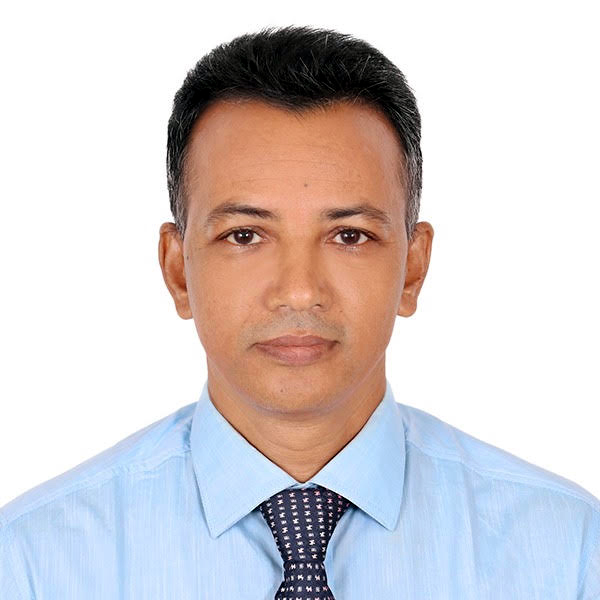
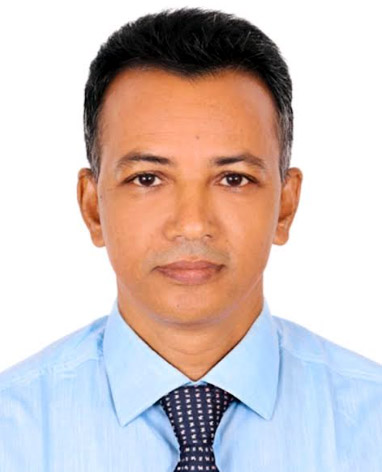
- Md. Zillur Rahman Chowdhury
- Update Time : 01:44:38 pm, Thursday, 11 June 2026
- / 224 Time View
If we look back to ancient times, we will find that once upon a time, there was no such thing as a government. Perhaps, back then, a government wasn’t even necessary. The human population was small. In their nomadic lifestyle, whatever people needed to survive—light, air, water, land, food, security—they obtained it easily, sometimes even in abundance. Therefore, in that primitive communist social system, human life was as peaceful as nature itself.
With the passage of time, as the population grew, an imbalance between the demand and supply of resources emerged. Disputes, conflicts, dispossession, and occupations over resources, opportunities, honor, and status began among different groups. To maintain social order, protect human security and rights, and resolve disputes, the government was born as a third party. The reality of various conflicts arising between two or multiple parties and the necessity of resolving them led to the emergence of the government machinery!
Initially, the government born out of inter-group conflicts was known as a chiefdom or Sardartantra. The head of the group was called the Sardar (Chief). Over time, in agricultural societies, the leaders of those city-states became kings or emperors, giving birth to monarchy! Mankind was divided into two halves: rulers and subjects, or masters and slaves. Common people grew accustomed to accepting the king or emperor as the representative of God and their rule as a divine right.
In the fifth century BC, in the city-state of Athens, Greece, the framework of democracy was established through direct voting instead of monarchy to ensure human security and rights. In the seventeenth and eighteenth centuries, according to the famous Social Contract theory, people formed governments through mutual contracts to secure their own safety and rights. The modern democratic and constitutional government that citizens have today through evolutionary stages to ensure their security and rights is simply a modified version of that ancient chiefdom system.
There have been and still are various types of political and economic ideologies of government in the world. Our country has also witnessed governments of different ideologies. However, in today’s era, citizens expect a welfare government and public management—a government that establishes good governance, justice, equity, and equality through transparency and accountability to ensure the security and rights of the people’s lives, improve their standard of living, and accelerate the socio-economic development of the country.
Since ancient times, to run the government system, the practice of taxing the people was introduced to bear the expenses of soldiers, manpower or public servants, and offices, and to pay their salaries and allowances. This practice is still active across nations today. With the evolution of time, in our country, this has now been named the ‘Pay Scale’ or National Pay Structure. If these tax and other revenue collection activities are not effective, the government will have no source of income, and in that case, it will be impossible to meet all public expenditures. In reality, it is seen that in such cases, existential crises of governments arise due to budget deficits.
A government mandated by the people exercises the sovereign power of the state. The government can exercise the supreme power to make final, absolute, and independent decisions regarding internal and external affairs of the state. The government reserves the authority or prerogative to impose taxes in the public interest, reform tax structures, expand the tax net or scope, and increase or decrease expenditures in various operating and development sectors of the budget. However, in all cases of revenue collection, budget formulation, and expenditure of funds, the people reserve the right to transparency and accountability from the government. This is the beauty of a democratic system, and achieving this is the success of a democratic government. Deviation from this causes the government to lose public support.
Immediately after independence, the revenue income of the Bangladesh government was low. At that time, the entire revenue income was spent just to meet operating expenses. For development expenditures, the country had to rely on foreign loans or grants. Gradually, we transitioned from that state towards self-reliance; with the increase in internal resource revenue collection, both operating and development expenditures have increased. In the past, the government has successfully implemented 8 pay scales or national pay structures. At the same time, over the past five and a half decades, the country’s average GDP growth has been achieved at a rate of 5.5 percent, and people’s per capita income has increased from about 100 US dollars (1971) to 2,769 US dollars (2025). That means the country’s trend of development is continuing. However, it is also true that in these 55 years, the country’s transition on the path of prosperity has not reached the level that was expected. In the history of the world, many devastated countries have successfully turned around in even less time.
The first pay scale after independence was given in 1973. Later, seven more pay scales were implemented in 1977, 1985, 1991, 1997, 2005, 2009, and 2015. The implementation of the 9th pay scale is currently under the consideration of the government. It is observed that the subsequent pay scale has been implemented every 5 to 8 years. However, even though about 12 years have passed since the last one in 2015, the government has not been able to declare a new national pay structure. Of course, many believe that the rate of salary and allowance increase in the last pay scale was very high and that the 9th pay scale was delayed due to the recent lack of stability in the country.
Pay scales do not have much of a direct relationship with inflation. However, we tend to link them. After all, the greed for extra profit belongs to us! As soon as the budget is announced, who increases the price of goods or services that were previously purchased at a lower rate? Surely, it is us. In economics, the demand and supply of goods and services are crucial for keeping the price level stable. Generally, prices fluctuate due to imbalances between the demand and supply of commodities and services. If there is an excess supply of money in the market compared to demand, and the supply of goods and products is low, prices go up. Due to increased production, when the quantity of goods and services increases in the market, the central bank increases the money supply from time to time to keep the price level normal and to smooth transactions. Again, in the opposite scenario, it withdraws money from the market. In a growing economy, a slight price increase every year as an incentive for production is expected for economic development. This is called ‘permitted inflation’.
Although prices rise primarily due to shortages in the supply in comparison with the demand of goods and services, in our country, upward pressure on the price level is created by artificially manipulating the supply chain through various irregularities. Besides, during abnormal situations like natural disasters or the pandemic, both demand and supply can be affected, leading to temporary inflation. Therefore, in our country, opportunities for inflation are created not so much by the pay scale, but far more by the failure to properly manage and control other undesired economic parameters.
One issue is very important here. That is, the responsibility to establish good governance, justice, equity, or fairness in the country lies with all persons employed in the service of the republic. It is their responsibility to ensure transparency and accountability. It is the sacred duty of all government employees to abandon bribery, corruption, and the arrogance of rank or position; to provide services easily to service-seekers sitting in the office; to behave decently with service-seekers; and to remove the environment of fear or anxiety from offices and courts. At the same time, it is the responsibility of the government to ensure an environment where government employees can perform their duties fearlessly according to the laws of the country. Every task in every department of the government must be executed according to the law, every single Taka of the budget must be spent as a direct or indirect investment in producing goods or services, and no money should be wasted.The same principle shall be exercised by other non-government agencies in spending their funds. Only then will the desired goals be achieved. In this case, even if the salaries and allowances of government employees are increased through a pay scale, if good governance—namely transparency and accountability—is ensured in every sector of the country, the economy will function properly, and production will increase along with the increase in money supply. As a result, unrest will not increase in society, prices will not rise, meaning inflation will not appear.
We now live in a democratic social system. Chiefdoms, oligarchies, or monarchies have become things of the past. Slavery no longer exists today. There are no emperors or empresses now. A culture has developed where we say ‘citizen’ instead of ‘subject’ and ‘servant of the nation’ instead of ‘servant of a master’. Compared to ancient times, society is much more civilized now. Today, the country is run by a government elected by the votes of the people. They believe in the ideology that ‘the party is bigger than the individual, and the country is bigger than the party.’ They consider themselves responsible rather than powerful. No one here is anyone’s master or servant; everyone is considered a good citizen of the country! The development vow today is that we will all move forward together, leaving no one behind. The lack of transparency and accountability is now the biggest worry for a good citizen. Terrorism, extortion, plundering, politicization, bribery, and corruption are old vices that cause annoyance and discomfort to modern society and act as major obstacles to socio-economic progress.
Experience shows that as soon as the issue of announcing a pay scale comes up, various talks begin between the service-seeker and the service-provider. Many indecent words are also uttered. Today, the media is more widespread and dynamic; everything goes viral in a flash. Criticism is good for the welfare of society, but it surely has a proper vocabulary! Not all talk constitutes meaningful speech; many words are pointless. The country, the people of the country, and the dreams of the country belong to everyone together. The tendency to belittle someone easily is not decent behavior. This indicates a poor standard of education and culture in society.
Generally, educated and qualified individuals get jobs by succeeding in open competitive examinations based on their merits in the service of the republic. For that reason, considering inflation and the rising standard of living, they will periodically receive salaries, allowances, and benefits from the government according to their entitlements. They will even receive respect from service-seekers. But they must also do their core job. That is to work with honesty and dedication to not just keep the wheels of the country’s economic production turning, but to accelerate them further. In doing so, even if salaries and allowances increase, prices will not rise because production will increase even more. In that case, the panic of inflation will not spread just upon hearing about a pay scale, and the public will not feel inclined to express anger or make adverse comments.
All arrangements of the state are for the people. All functions of the republic are executed in the public interest. All laws, rules, and regulations are formulated in the light of the constitution. The constitution reflects the will and aspirations of the people. Therefore, to ensure human security and rights in today’s era, the government must act as a third party among all stakeholders, including the public, the public sector, and the private sector. It is the sacred duty of a democratically elected government of the people to perform its duties while guarding that trust of the people. And it is an even bigger sacred duty of all employees engaged in the service of the republic to protect that trust by ensuring transparency and accountability under the supervision of the government.
Unfortunately, contrary to this expectation, when a section of public and private employees and others indulge in a festival of bribery, corruption, and irregularities to acquire unimaginable amounts of wealth, houses, cars, and bank balances, and the people—the ultimate source of power—witness this helplessly, they become disheartened! They become even more disheartened when they see that a section of those whose duty it is to prevent this, gets involved in their misdeeds and saves them from punishment! It is most painful for those who work with honesty and dedication, leading a clean life, yet face slander and suffering due to the misdeeds of others! It is the demand of everyone in the state that this miserable state of affairs must come to an end.
In conclusion, it can be said that the country is moving forward. To sustain this trend of economic progress, establishing good governance—namely transparency and accountability—in all sectors is indispensable. This will restore order to society, and the people of the country will enjoy their rights and security. The country will thrive, and our beloved Bangladesh will move forward, taking everyone along.
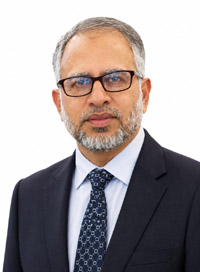
Author: Grade-1 (OSD), Ministry of Public Administration.
Tag :
Please Share This Post in Your Social Media
About Author Information