Dhaka
7:40 pm, Sunday, 20 September 2026

News Title :
News Title :

Determinants of Development: Education, Patriotism and National Unity

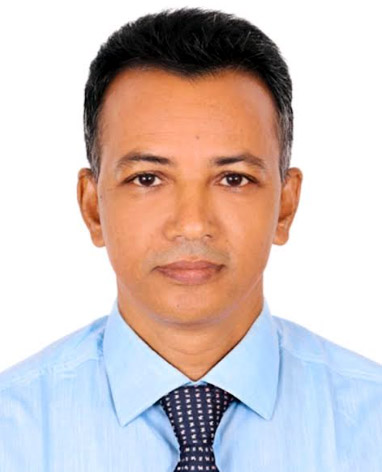
- Md. Zillur Rahman Chowdhury
- Update Time : 08:56:54 am, Monday, 11 May 2026
- / 375 Time View

Human beings are inherently beautiful by creation, and this beauty is further enhanced by the knowledge they acquire. Through education, people attain knowledge, and knowledge makes a person noble. This nobility enhances human beauty. Great-souled individuals illuminate society; they are its life force and the inspiration for progress. They stand as a formidable, high wall against illiteracy,
miseducation, superstition, cultural degradation, injustice, and all forms of decay. They are the driving forces of peace, comfort, and progress. The primary objective of education is the acquisition of knowledge. Education is the process of fully developing the latent potential or qualities within an individual. The system or process through which knowledge is acquired is called the education system. This process is designed in such a way that it fosters the development of a person’s hidden talents and increases their skills, capabilities, and competence. It leads to an inner radiance. An educated person is an asset to their family, society, and the state. Proper education transforms people into advanced and skilled human resources, enabling them to build a prosperous society, country, and nation. Conversely, an uneducated and ignorant population becomes a burden to society and a cause of distress or suffering. There are two main mediums of education: first, acquiring knowledge by reading books, and second, gaining knowledge by observing the Creator’s creations through travel. Humans learn from teachers, peers, family, and society; they learn from their own experiences and the entire course of their life’s work. Humans also learn from nature, which is considered a great teacher of mankind. At the dawn of civilization, humans were once helpless before nature. Necessity forced them to learn. They learned that sharpening or smoothing stones made hunting easier—a lesson born out of the urge to survive. Humans walked thousands of miles and that hardship inspired them to build high-speed airplanes. Human needs have inspired thought and research, resulting in thousands of inventions, leading up to today’s ICT and AI technologies. Since the beginning of civilization, humans have been striving to know the unknown. Whatever people gained through formal or informal education was first recorded on tree leaves or stones, and gradually compiled into books and preserved in libraries. In the hope of knowing the unknown or the desire to conquer the unconquerable, humans set out on travels, explorations, or space missions. They have stored the stories of their victories and the chronicles of their failures as stepping stones for future success. This tradition, passed down through generations, continues to enrich the treasury of human experience. Those libraries and information repositories are now the greatest sources of human knowledge. Even today, the journey continues; the relentless pursuit of knowledge and research remains unstopped. This is the way of life for mankind; civilization, progress, and prosperity will advance along this path. In the search for peace, comfort, and progress—ethics, morality, values, humanity, family, society, state, environment, science, technology, religion, and labor—all are subjects of human education and knowledge. Humans must become more beautiful, more humane, and more liberal. They must be non-violent. They will love and spread love. Instead of separation, they will strengthen the bonds between people. They will decorate their society, civilization, and life with even more glory. There is no end to their knowing, no end to their watching no end to their experience, and no end to their acquisition of knowledge. In this life, humans face a boundless universe. They have been asked to know this world and to explore it. The more humans know and see, the more enriched they will become. Their colors and forms will change; their lives will be more beautiful, and society will be more magnificent. Therefore, the human quest for knowledge is ongoing and will continue indefinitely. It is said that education is the backbone of a nation. It is also said that the more educated a nation is, the more developed it is. Napoleon Bonaparte said, “Give me an educated mother, I will give you an educated nation.” Will and Ariel Durant said, “Education is the transmission of civilization.” Swami Vivekananda said, “Education is the manifestation of the perfection already in man.” World Poet Rabindranath Tagore said, “The education of humanity is the ultimate education, and everything else is subordinate to it.” Mahatma Gandhi said, “Live as if you were to die tomorrow. Learn as if you were to live forever.” Syed Mujtaba Ali said, “No one has ever gone bankrupt by buying books.” Socrates said, “Education is the kindling of a flame, not the filling of a vessel” and “Education is self-realization.” Aristotle said, “Education is the creation of a sound mind in a sound body.” Our national poet Kazi Nazrul Islam said, “The education that nourishes both the body and mind of a child shall be our education.” The Prophet (PBUH) said, “Seek knowledge from the cradle to the grave.” The Almighty Creator says, “Read in the name of your Lord who created; who taught by the pen; taught man that which he knew not.” All these are calls toward the path of light, formulas for well-being and happiness, the foundation for prosperity, and the ladder to developed human life.Humans have no role in being born as humans; rather, the task after birth is to “become” a human. It is also said that “The most tough task for a human is to humanise. ” Humans must achieve that difficult goal. Humans have been told to know the unknown, to see the creation, to realize the signs of creation, and to think or research about them. If a nation follows that path, it will find success. The nations that realized this truth have succeeded. Those who deviated from this truth have been consumed by poverty, hunger, ignorance, failure, and chaos. Education is freedom; knowledge is power. There are currently 195 countries in the world, of which only about 40 are developed. Their Human Development Index (HDI) is near 100%. Their citizens are 100% literate. Their educational systems and institutions are world-famous. Oxford, Cambridge, Harvard, and MIT are all their achievements. Their progress in every branch of knowledge is enviable. Their research and the results obtained from it are remarkable. Almost 100% of their citizens are advanced and skilled human resources. They have been able to provide a high-consumption lifestyle by fulfilling all the basic rights of their citizens. There is good governance, justice, and the guarantee of wealth and life security. They have a strong presence in all branches of literature, culture, economy, science, and technology. The world’s top recognitions are exclusively in their possession. America, discovered in 1492 and independent in 1776, has become the world’s most powerful and prosperous nation through 250 years of tireless effort. They have more than 420 Nobel Prizes in their bag. Japan, which was almost destroyed in World War II, turned around within just four decades to become one of the world’s leading economic powers. Sweden, Norway, Germany, the UK, and Russia—all developed countries—have nearly 100% literacy rates and their people are educated in quality, meaningful, and up-to-date systems. On the other hand, those who cannot meet the minimum basic rights of their citizens face the primary problem of a weak workforce or human resources,they cannot establish their education system on a strong foundation. As a result, they are unable to harness internal or external resources, and their economies are weak. Along with this, there are various external influences and internal chaos. The HDI of these countries is very low, meaning the standard of living is not good. Bangladesh lags far behind in this Human Development Index—ranking 129th out of 193 countries (2022). Not 100% of our people are educated. Even for those who are, the quality of that education remains a question. There is room to examine whether our education system, curriculum, environment, and the relationship between students, teachers and parents are conducive to education and capable of providing quality education in this era of globalization. It is necessary to examine how much research is being conducted in our industry, literature, science, and technology. If the educational structure is not world-class, the country’s talents cannot be retained; similarly, in a country with a weak economy, they do not return after finishing their studies due to various uncertainties. Those who stay in the country—how skilled, productive, or capable they are—is also a matter of consideration. For the overall progress of the country, an educated, patriotic, and united nationalist nation is required. A stable society and state system are needed. Good governance and the guarantee of justice are essential. The children of today will be the future of tomorrow. In a modern educational structure and supportive environment, students and teachers alike will be oriented towards schools, fond of libraries, and devoted to research and knowledge. The Almighty says, “Teaching religion and morality is the greatest asset for a child.” We must remember that ” Efficiency without honesty is dangerous and honesty without efficiency is worthless.” Likewise, education without religion or religion without work—both are incomplete. We want complete education in this fertile and generous soil of ours; an education that is nourished by religion, labor, ethics, morality, and humanity; enriched by literature and culture; and prosperous in science and technology research. Only that education can provide us with an improved standard of living, a prosperous society, and a safe life. That knowledge is power, and that education will be our ladder to peace, comfort, freedom and progress.That should be our desired path.
The Author: Grade-1 (OSD), Ministry of Public Administration.
Tag :
Please Share This Post in Your Social Media
About Author Information