Dhaka 9:01 pm, Sunday, 20 September 2026

Industrial factory in a residential area of Aranghata, Department of Environment issues notice over pollution

Shamsul Alam Khokon, Khulna
  • Update Time : 01:58:45 pm, Sunday, 20 September 2026
  • / 1 Time View
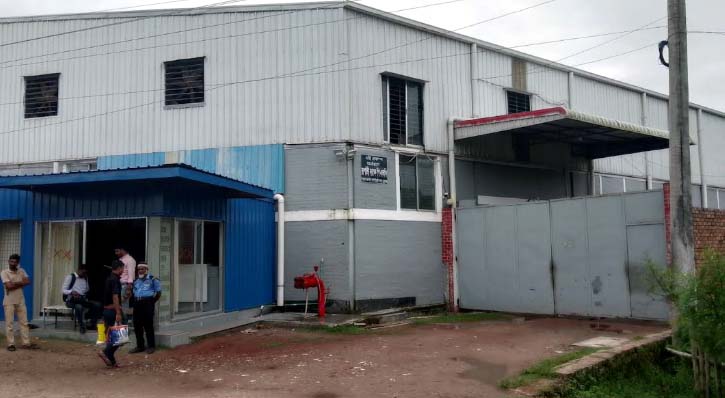
Various complaints—including noise, air, and environmental pollution—have been raised against an industrial factory established within a residential area in the Arangghata locality of Khulna city. Local residents allege that the production activities of the factory, named ‘E-Shana Nonwoven Fabrics Limited,’ are generating noise, light, and air pollution day and night. This is disrupting the area’s natural environment and the daily lives of the residents. Several local residents have submitted a written complaint to the Department of Environment regarding this matter.

The complaint calls for urgent intervention by the relevant authorities to halt the environmental pollution caused by the factory. In response to the complaints from affected residents, the Khulna District Office of the Department of Environment has issued two written notices to the factory. The written complaint states that the factory was established in the Teligati Dakshinpara residential area, adjacent to the bypass road under the Arangghata Police Station. The factory’s loud noise, nighttime lighting, and air pollution are disrupting the residents’ sleep and normal way of life. The complainants claim that the factory’s operations are also damaging nearby agricultural land and homesteads.

Mahfuzur Rahman Mukul, a divisional coordinator for BELA (Bangladesh Environmental Lawyers Association), stated that there are no regulations permitting the establishment of an industrial factory in a residential area by filling in ponds. Moreover, noise, light, and air pollution are completely unacceptable. He urged officials from the Department of Environment to intervene immediately to stop these environmentally destructive practices. The complaint further mentions that there used to be two large ponds in the area. Locals allege that the factory was built after filling in these two ponds. One pond belonged to the late Habibur Rahman, and the other to the late Amulya Mondal. They were quite large ponds.

Residents claim that filling the ponds and surrounding land is having an adverse effect on local water drainage and the environment. Locals also complain that the factory is reducing the amount of available agricultural land and harming those involved in farming. In particular, noise pollution levels have escalated because the factory operates throughout the night. The complaint also alleges that whenever the power goes out, the generator is switched on, creating loud noise and vibrations.

The complainants further claim that although workers at the factory are required to work 12-hour shifts, they are not provided with adequate facilities. The complaint also mentions instances where some workers were dismissed from their jobs. Issues regarding local political influence, land transactions, and the fear of displacement of local residents have also been highlighted in the complaint. Locals claim that there is an ongoing effort to expand the industrial plant by gradually acquiring or purchasing land across the entire area. They fear that this could put the area’s agricultural land and homesteads at risk in the future.

Local residents have demanded an on-site investigation into the factory’s environmental clearance, land use, noise and air pollution, and waste management practices. Local residents Dr. Manoranjan Mondal, Swapan Mondal, and Zainal Abedin have signed the complaint. However, refuting these allegations, the company’s Managing Director, Maftun Manoj, stated that representatives from the Department of Environment had visited and issued specific directives. “We are working in accordance with those instructions.” “We have also requested a six-month timeframe to reduce noise pollution.” “This establishment has created employment opportunities for 800 people in the area.” “Workers here operate in shifts.”

“Consequently, there is no scope for working excessive hours.” “However, if someone chooses to work overtime to earn more, there is little we can do about that.” “We are conducting production in compliance with all government regulations.” Complainant Dr. Manoranjan Mondal stated that the factory was established after strategically evicting seven or eight local families. “Two large ponds were filled in.” “As a result, local residents are facing hardships regarding water for bathing and cooking.” “The factory’s deafening noise is making the area uninhabitable.” “The noise from the generators, in particular, causes vibrations in the locality.”

“Although the Department of Environment has issued three notices, the mill authorities are ignoring the matter.” A team from the Department of Environment, including Sardar Shariful Islam—Assistant Director of the Khulna Divisional Office—inspected the site. After finding evidence of noise and air pollution, they issued another notice demanding a reduction in pollution levels. He stated that the factory is generating noise at a level of 75 decibels. “This is 15 decibels above the permissible limit.” “Three notices have been issued to have this reduced.” “They have also been instructed to take effective measures to curb air pollution.”

“He added that if they fail to comply, action will be taken in accordance with the regulations.” The notice states: “This office received a written complaint from the residents of Teligati—specifically those living near the Ishana Nonwoven Fabrics Ind. Ltd. facility located at Teligati Pachular Ghat City Bypass Road, Aranghata, Khulna—alleging that the intense, continuous noise from machinery and generators, along with hot air from exhaust fans, has made living conditions unbearable. Measurements taken by this office at a residence adjacent to the factory recorded a noise level of 75 decibels, which exceeds the permissible limits set by the Noise Pollution Control Rules, 2025.

Following the complaint and an on-site inspection that confirmed the allegations, instructions were issued requiring an explanation regarding the expansion of the facility’s infrastructure and the implementation of effective measures to control noise pollution. In your response, you indicated that an eight-month period would be required; however, this timeframe was deemed unacceptable. Consequently, you are hereby directed to—within the next forty-five working days—provide an explanation for the unauthorized infrastructure expansion and implement effective noise control measures, including installing the generator within an enclosed or soundproof room.

Additionally, you are instructed to keep all windows and exhaust fans on the northern and eastern sides of the facility closed until noise control measures are fully implemented. Failure to comply will result in appropriate legal action against your establishment, including the revocation of its environmental clearance.” This information was conveyed in an office order signed by Harun-or-Rashid, Assistant Director of the District Department of Environment, on September 7.

Tag :

Please Share This Post in Your Social Media

Write Your Comment

Your email address will not be published. Required fields are marked *

Save Your Email and Others Information

About Author Information

Industrial factory in a residential area of Aranghata, Department of Environment issues notice over pollution

Update Time : 01:58:45 pm, Sunday, 20 September 2026
Various complaints—including noise, air, and environmental pollution—have been raised against an industrial factory established within a residential area in the Arangghata locality of Khulna city. Local residents allege that the production activities of the factory, named ‘E-Shana Nonwoven Fabrics Limited,’ are generating noise, light, and air pollution day and night. This is disrupting the area’s natural environment and the daily lives of the residents. Several local residents have submitted a written complaint to the Department of Environment regarding this matter.

The complaint calls for urgent intervention by the relevant authorities to halt the environmental pollution caused by the factory. In response to the complaints from affected residents, the Khulna District Office of the Department of Environment has issued two written notices to the factory. The written complaint states that the factory was established in the Teligati Dakshinpara residential area, adjacent to the bypass road under the Arangghata Police Station. The factory’s loud noise, nighttime lighting, and air pollution are disrupting the residents’ sleep and normal way of life. The complainants claim that the factory’s operations are also damaging nearby agricultural land and homesteads.

Mahfuzur Rahman Mukul, a divisional coordinator for BELA (Bangladesh Environmental Lawyers Association), stated that there are no regulations permitting the establishment of an industrial factory in a residential area by filling in ponds. Moreover, noise, light, and air pollution are completely unacceptable. He urged officials from the Department of Environment to intervene immediately to stop these environmentally destructive practices. The complaint further mentions that there used to be two large ponds in the area. Locals allege that the factory was built after filling in these two ponds. One pond belonged to the late Habibur Rahman, and the other to the late Amulya Mondal. They were quite large ponds.

Residents claim that filling the ponds and surrounding land is having an adverse effect on local water drainage and the environment. Locals also complain that the factory is reducing the amount of available agricultural land and harming those involved in farming. In particular, noise pollution levels have escalated because the factory operates throughout the night. The complaint also alleges that whenever the power goes out, the generator is switched on, creating loud noise and vibrations.

The complainants further claim that although workers at the factory are required to work 12-hour shifts, they are not provided with adequate facilities. The complaint also mentions instances where some workers were dismissed from their jobs. Issues regarding local political influence, land transactions, and the fear of displacement of local residents have also been highlighted in the complaint. Locals claim that there is an ongoing effort to expand the industrial plant by gradually acquiring or purchasing land across the entire area. They fear that this could put the area’s agricultural land and homesteads at risk in the future.

Local residents have demanded an on-site investigation into the factory’s environmental clearance, land use, noise and air pollution, and waste management practices. Local residents Dr. Manoranjan Mondal, Swapan Mondal, and Zainal Abedin have signed the complaint. However, refuting these allegations, the company’s Managing Director, Maftun Manoj, stated that representatives from the Department of Environment had visited and issued specific directives. “We are working in accordance with those instructions.” “We have also requested a six-month timeframe to reduce noise pollution.” “This establishment has created employment opportunities for 800 people in the area.” “Workers here operate in shifts.”

“Consequently, there is no scope for working excessive hours.” “However, if someone chooses to work overtime to earn more, there is little we can do about that.” “We are conducting production in compliance with all government regulations.” Complainant Dr. Manoranjan Mondal stated that the factory was established after strategically evicting seven or eight local families. “Two large ponds were filled in.” “As a result, local residents are facing hardships regarding water for bathing and cooking.” “The factory’s deafening noise is making the area uninhabitable.” “The noise from the generators, in particular, causes vibrations in the locality.”

“Although the Department of Environment has issued three notices, the mill authorities are ignoring the matter.” A team from the Department of Environment, including Sardar Shariful Islam—Assistant Director of the Khulna Divisional Office—inspected the site. After finding evidence of noise and air pollution, they issued another notice demanding a reduction in pollution levels. He stated that the factory is generating noise at a level of 75 decibels. “This is 15 decibels above the permissible limit.” “Three notices have been issued to have this reduced.” “They have also been instructed to take effective measures to curb air pollution.”

“He added that if they fail to comply, action will be taken in accordance with the regulations.” The notice states: “This office received a written complaint from the residents of Teligati—specifically those living near the Ishana Nonwoven Fabrics Ind. Ltd. facility located at Teligati Pachular Ghat City Bypass Road, Aranghata, Khulna—alleging that the intense, continuous noise from machinery and generators, along with hot air from exhaust fans, has made living conditions unbearable. Measurements taken by this office at a residence adjacent to the factory recorded a noise level of 75 decibels, which exceeds the permissible limits set by the Noise Pollution Control Rules, 2025.

Following the complaint and an on-site inspection that confirmed the allegations, instructions were issued requiring an explanation regarding the expansion of the facility’s infrastructure and the implementation of effective measures to control noise pollution. In your response, you indicated that an eight-month period would be required; however, this timeframe was deemed unacceptable. Consequently, you are hereby directed to—within the next forty-five working days—provide an explanation for the unauthorized infrastructure expansion and implement effective noise control measures, including installing the generator within an enclosed or soundproof room.

Additionally, you are instructed to keep all windows and exhaust fans on the northern and eastern sides of the facility closed until noise control measures are fully implemented. Failure to comply will result in appropriate legal action against your establishment, including the revocation of its environmental clearance.” This information was conveyed in an office order signed by Harun-or-Rashid, Assistant Director of the District Department of Environment, on September 7.