Dhaka
10:55 am, Sunday, 20 September 2026

News Title :
News Title :

Poverty Chronicles and Our Pursuit of Happiness

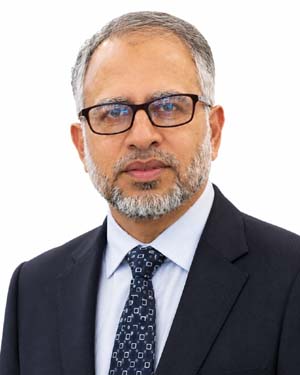
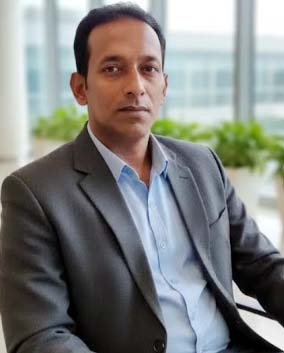
- Md. Zillur Rahman Chowdhury
- Update Time : 04:49:59 pm, Tuesday, 28 July 2026
- / 105 Time View
By nature, human beings desire to be happy; no one wants to be unhappy or poor. Nobody wishes to live amid a shortage or crisis of wealth or resources. Yet, even when unwanted, poverty surrounds people in various ways and for diverse reasons. People lag behind in their quality of life not merely due to a lack of financial assets or economic poverty; rather, the absence of many other non-economic elements deprives them of enjoying happiness in life. Conversely, through relentless efforts to build the nation, society, and personal lives, people can overcome all forms of poverty and fill their lives with happiness and comfort.
Generally, poverty refers to the lack of financial resources required to meet basic needs. When a deficiency in income or wealth makes living difficult, it is termed Economic Poverty. Economic poverty has various dimensions. General Economic Poverty refers to a situation where people’s purchasing power is so low that they cannot maintain a minimum standard of living. On the other hand, in Absolute Poverty, people fail to fulfill their basic needs such as food, clothing, shelter, education, and healthcare.
Furthermore, when a segment of society lags behind others in terms of income, wealth, and opportunities, it is known as Relative Poverty. Meanwhile, according to the World Bank, if a person’s daily income is less than $2.15 USD, they are considered to be living in Extreme Economic Poverty. This state is characterized by severe malnutrition, lack of safe water and sanitation, and deprivation of medical care and primary education. It is an acute and extreme form of absolute poverty. Economic poverty is measured based on income, fulfillment of basic rights, and quality of life. Primarily, financial poverty is the major cause of human suffering.
Poverty does not merely signify low income or the inability to meet basic needs. It also reflects vulnerability, insecurity, and the lack of opportunity to participate in society. The creation of poverty is not solely driven by a shortage of resources; rather, it is the result of multidimensional deprivation, rooted in discriminatory social and economic systems. Alongside economic poverty, non-economic poverty also exists in society. In human life, this multidimensional poverty manifests in various forms—such as poverty of wealth, poverty of mind, cultural poverty, poverty of knowledge, moral poverty, and social poverty.
Poverty of wealth refers to a scarcity or lack of financial assets. However, in our society, many wealthy people lack generosity of heart. They are mentally poor. By harboring negative traits such as narrow-mindedness, envy, inferiority complexes, self-centeredness, bigotry, and pride, they become victims of Mental Poverty. Mental poverty stems from a lack of proper education, social responsibility, empathy, and love. Aggression, irregularity, corruption, and the inability to tolerate others’ success or progress are symptoms of mental poverty in society.
Such people can never find contentment or happiness despite their abundance of wealth. Their desires never end; they spend their days and end their lives with an unfulfilled soul. The more they get, the more they want—their greed is insatiable. Despite having plenty, they cannot easily accept the achievements or progress of others, nor can they contribute to others’ humanitarian needs out of their abundance. They fear that giving to others will diminish their own wealth, or they question why they should share their hard-earned assets with anyone else.
However, the reality is that human beings are not the ultimate owners of any wealth, nor is anyone’s position permanent. As the saying goes, “Riches have wings; A king becomes a beggar, and a beggar becomes a king. The rich today may be poor tomorrow, or the poor today may become wealthy tomorrow. Wealth is a gift of nature, controlled by the Almighty Creator. He grants to whom He wills and takes away from whom He wills. He is the true owner of wealth, and it must be spent according to His will and guidance. Those in need must be helped, and those with nothing must be given support. The wealthy must be humane. One must remember that true happiness lies in sacrifice, not in consumption. We should not find happiness only in our own well-being, but also in the happiness of others, and we must share in their sorrows as well. We must remember the famous lines:
”None came into this world to remain engrossed only in oneself,
Every one of us is for others, and all of us are for all.”
Therefore, even with material progress, if human mindset and values do not evolve proportionally, people cannot truly enjoy a meaningful life.
Alongside poverty of wealth and mind, many also suffer from Cultural Poverty. Disregarding one’s own heritage, civilization, history, traditions, art, literature, customs, and values constitutes cultural poverty. Forgetting one’s roots and blindly imitating others at the expense of one’s own identity are major signs of this poverty, leading to a decline in aesthetic taste. To enjoy a happy and refined life, it is essential to cultivate a culture of progressive thought, positive outlook, self-improvement, mental health development, social harmony, moral values, appreciation for art and literature, advancements in science and technology, religious and social bonds, discipline, unity, and mutual cooperation and empathy.
Refined lifestyle habits among citizens—such as reading books, acquiring knowledge, skill development, prayer, balanced nutrition, physical exercise, balancing work and rest, moderation, frugality, punctuality, neatness, cleanliness, standing by others out of social responsibility, and expressing gratitude—are key elements of a rich culture. Ensuring these enhances human life. In underdeveloped, least developed, and developing countries, cultural poverty exists alongside financial poverty. When combined with economic hardship, it further degrades the quality of life. This form of poverty is widespread in the daily lives of the people of Bangladesh.
Poverty of Knowledge (or lack of knowledge/ignorance) narrows human life the most. Acquiring knowledge is the finest aspect of human existence. Along with the expansion of education and infrastructure development, ensuring quality education is a fundamental concern. Rote learning, lack of creativity, and a deficit in research and practical knowledge exacerbate the poverty of knowledge. Failing to keep pace with the digital world, science, and information technology leaves a population living a confined life, much like people trapped in a closed room. We have yet to achieve our expected milestones in quality education, which hinders our ability to enjoy a higher standard of living.
On the other hand, Moral Poverty arises from a lack of honesty, justice, and human values. It is not a deficit of financial wealth, but a shortage of ideals. Greed for money and power, corruption, weak thinking, mean-spiritedness, and excessive selfishness are symptoms of moral poverty in society. The greater this poverty, the higher the rate of crime and chaos. The prevailing picture of crime and disorder in our society bears testimony to the presence of this poverty.
Social Poverty refers to prevailing inequality, superstition, and deprivation of rights in society. Here, individuals feel a lack of social support and relationships. They lag behind, are denied earned dignity, and face inequality in enjoying basic rights due to discrimination based on religion, caste, or gender. They remain powerless and unable to voice opinions on crucial social matters. Discrimination against women, indifference toward marginalized communities, and obstacles to establishing good governance aggravate social poverty. Social poverty deprives people of a dignified life; even in the absence of economic poverty, social poverty leaves individuals feeling inferior and deprived of dignified happiness. The quality of life of our citizens is deeply affected by social poverty.
It is worth noting that economic and non-economic poverty are complementary and interconnected. One can be the cause or consequence of the other, or both. That is, economic poverty can give rise to or exacerbate mental, cultural, and knowledge poverty. Realities reflected in sayings like “Poverty destroys character,” “Necessity knows no law,” or literary expressions such as “Extreme poverty ruins faith,” “When poverty comes in at the door, love flies out through the window,” or Sukanta Bhattacharya’s famous line “The full moon is like a burnt bread,” and Rafiq Azad’s “Give me rice, you bastard, or I will devour the map” illustrate this truth. Conversely, non-economic poverty can make an individual economically weaker. Together, these two poles of poverty can create a vicious cycle, intensifying the crisis. This vicious cycle operates in all poverty-stricken nations, and Bangladesh is certainly no exception.
The Human Development Index (HDI) evaluates the standard of living across nations by assessing dimensions such as standard of living (per capita income), knowledge (mean and expected years of schooling), and a long, healthy life (life expectancy at birth). According to the UNDP Human Development Index (2025 report), leading countries include Iceland, Norway, Switzerland, Denmark, Germany, and Sweden (scoring between 0.972 and 0.959). Bangladesh ranks 130th (with a score of 0.685). This clearly indicates that developed nations have not only eradicated economic poverty (with per capita incomes like $104,896 in Switzerland and $91,884 in Norway) to ensure a high standard of living, but have also achieved remarkable success in alleviating non-economic poverty—such as mental, cultural, knowledge, moral, and social poverty.
In contrast, as a developing country with a per capita income of $2,820 USD, a general poverty rate of 21–28%, and extreme poverty at 7–9% (as of 2025), Bangladesh suffers significantly from both economic and non-economic poverty. Regrettably, our level of happiness and life satisfaction is nowhere near comparable to that of developed nations. Over the past 54 years since independence, Bangladesh’s progress in eliminating economic and non-economic poverty has not been satisfactory, primarily due to disunity, instability, and weaknesses in planning and execution.
Recent studies show that while economic poverty has declined in many least developed and developing countries, eliminating non-economic or multidimensional poverty and improving overall life quality remain major challenges. Needless to say, this challenge is paramount for Bangladesh. Considering the reality, it can be said that the people of Bangladesh are suffering more from non-economic poverty than from economic poverty itself.
In conclusion, our mental, cultural, educational, intellectual, moral, and social poverty is so profound that while living in a poor country, we talk loudly about morality and tell tall tales; we earn money in this poor country but deposit or spend it in developed nations like Switzerland or Canada! We leave the children of the poor in chaos at home while sending our own children to study abroad. This is neither patriotism nor morality, nor is it the practice of truth. Real change will not come through this path. We must have honesty in our thoughts, words, and actions; we must possess patriotism, empathy, and love for marginalized people; we must acquire proper education, and above all, we must be truthful. We must be prepared not just to consume, but to sacrifice for others. Only then can we move forward on a planned path and establish a functional system in the country. On that path, all our economic and non-economic poverty will one day be eradicated, and like developed nations, we too will enjoy a life of genuine, poverty-free happiness.
Author: Retired Chairman (Grade-1),
Bangladesh Land Port Authority,
Government of the People’s Republic of Bangladesh.
Tag :
Please Share This Post in Your Social Media
About Author Information