Town Hall Meeting on the Rights and Development Priorities of Marginalized Communities in Sreemangal

- Update Time : 12:06:16 pm, Tuesday, 17 November 2026
- / 5 Time View
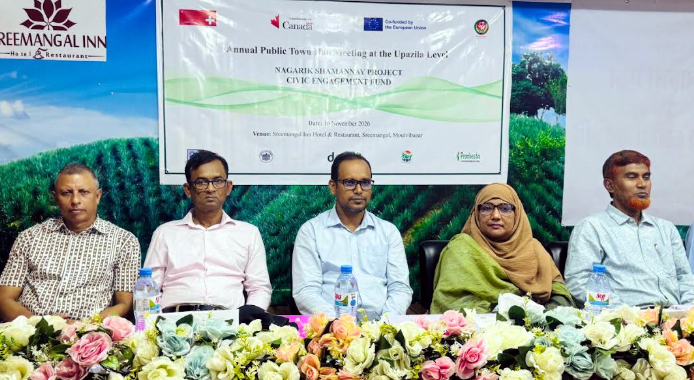
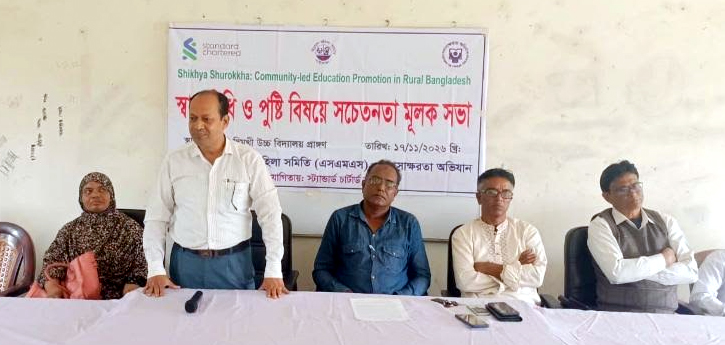
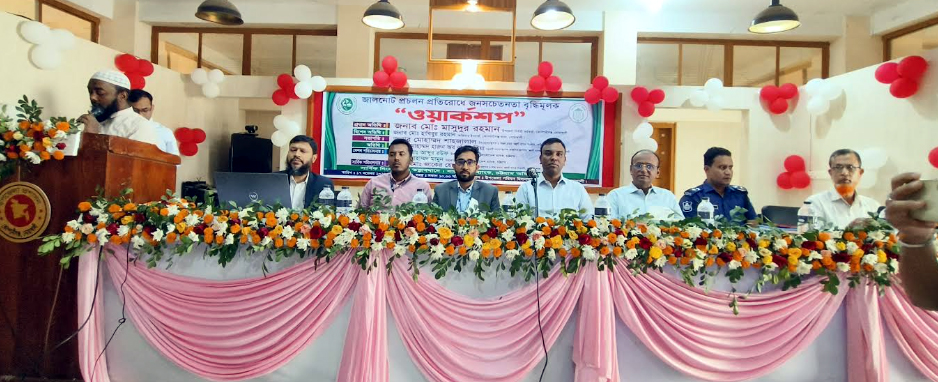
An annual public town hall meeting was held in Sreemangal, Moulvibazar, to address the challenges and rights of marginalized communities and to identify local development priorities. The meeting, organized by the Pragati Samaj Unnayan Sangstha (PSUS) under the ‘Citizen Coordination Project’ (Nagorik Somonnoy Prokolpo), took place on Monday (November 16) at 11:00 AM in the hall of Hotel Sreemangal Inn (Shadi Mahal). The event was supported by DNet.
Guests in attendance included Upazila Agriculture Officer Md. Alauddin, Upazila Engineer Abdur Rakib, Upazila Social Services Officer Md. Sueb Hossain Chowdhury, Youth Development Officer Asim Kumar Kar, Upazila Women Affairs Officer Shaheda Akter, and various chief executives of non-governmental development organizations. The proceedings began with welcome remarks from Md. Rezaul Kabir Laskar, Executive Director of PSUS. Asif Ahmed Tanmoy, Project Manager at DNet, outlined the objectives and activities of the Citizen Coordination Project.
Md. Zainal Abedin, the Upazila Coordinator for PSUS, spoke on local issues and development priorities within the Sreemangal Upazila. Asif Ahmed Tanmoy explained that the primary goal of the project is to integrate the opinions and demands of various marginalized groups—including women, youth, and tea garden workers—into local development planning and decision-making processes.
To achieve this, the project focuses on enhancing the capacity of social development and community-based organizations, while fostering effective communication and coordination between the public and government institutions. He noted that public town hall meetings serve as a highly effective platform for conveying local concerns and development expectations directly to the relevant authorities.
Highlighting the development priorities for Sreemangal Upazila, Md. Zainal Abedin stated that the core objectives of the Citizen Coordination Project include identifying the challenges faced by residents, valuing their perspectives, and ensuring their participation in the formulation of development plans. During the session, he emphasized the importance of addressing climate change-related risks and disaster preparedness, infrastructure development, the renovation of embankments and canals, healthcare, access to safe water and sanitation, education, youth employment, social protection, women’s safety, and ensuring transparency and accountability in development initiatives.
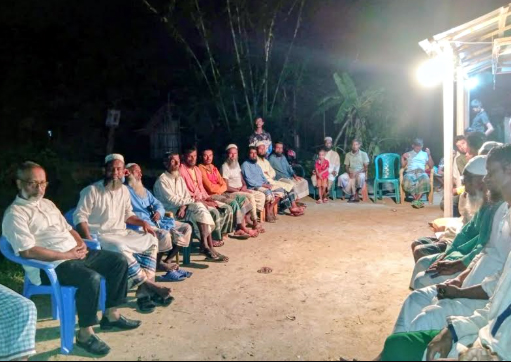
Representatives from various marginalized groups—including women, youth, tea garden workers, and ethnic minorities—shared the challenges, deprivations, and expectations specific to their respective areas. Furthermore, an open discussion and exchange of views took place regarding potential solutions to these issues, access to government services, and the responsibilities of the relevant government departments.
Emphasis was also placed on fostering public participation in local development activities, upholding rights, and strengthening effective coordination with government institutions. Notably, under the ‘Civic Engagement Fund,’ a ‘Civic Coordination Project’ has been underway since 2025 in the Kamalganj, Sreemangal, Kulaura, and Barlekha upazilas of Moulvibazar district.
Implemented by DNet, the primary objective of this project is to empower marginalized populations—particularly women and youth—living in or near areas of significant biodiversity, while also enhancing the institutional capacity of Civil Society Organizations (CSOs) and Community-Based Organizations (CBOs). The project is funded by the Swiss Agency for Development and Cooperation (SDC), Global Affairs Canada (GAC), and the European Union, with the fund being managed by GFA Consulting Group.
Please Share This Post in Your Social Media
About Author Information