Dhaka 9:55 pm, Thursday, 26 November 2026

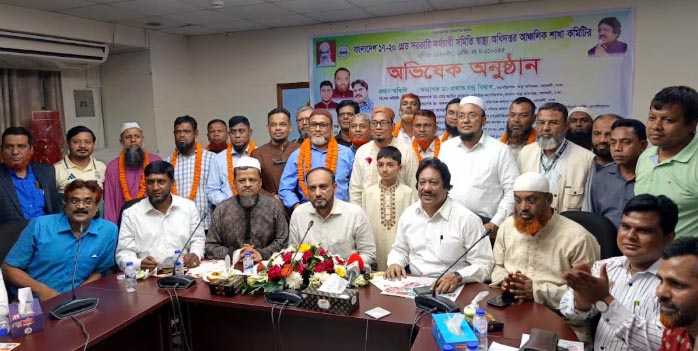
Inauguration Ceremony of the Regional Branch Committee of the Bangladesh Grade 17–20 Government Employees Association at the Directorate General of Health Services

Romana Rahman
  • Update Time : 03:53:55 pm, Thursday, 26 November 2026
  • / 0 Time View

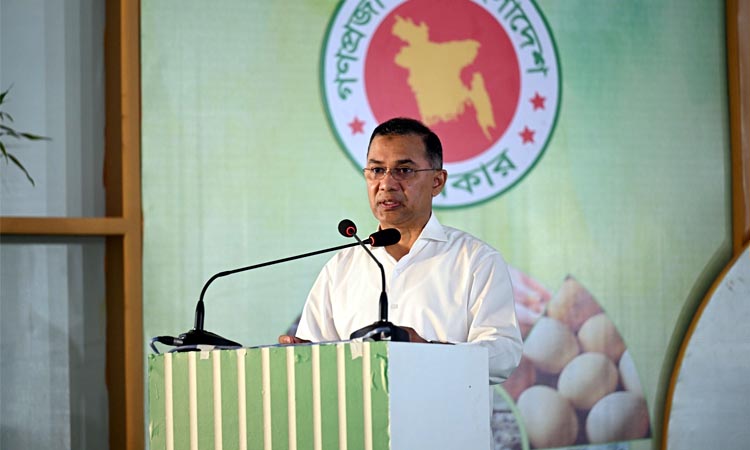
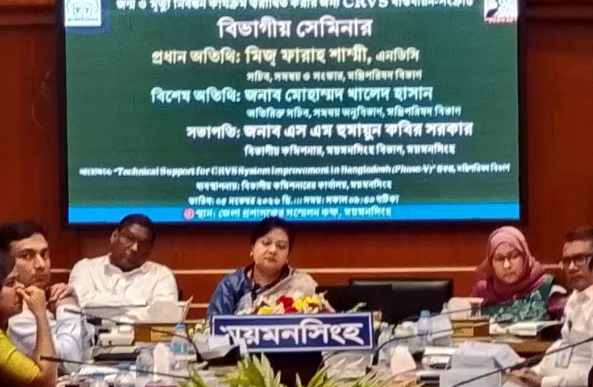
The inauguration ceremony for the regional branch committee of the ‘Bangladesh Grade 17-20 Government Employees’ Association’ at the Directorate General of Health Services (DGHS) was held in the conference room of the DGHS in Mohakhali, Dhaka. The event commenced at 4:00 PM on Thursday. Professor Dr. Prabhat Chandra Biswas, Director General of the DGHS, Mohakhali, Dhaka, attended the event as the chief guest. Special guests included Professor Dr. Md. Zahid Hossain, Additional Director General (Administration) of the DGHS; Professor Dr. Jahangir Kabir, Additional Director General (Planning and Research) of the DGHS; Professor Dr. Md. Shahjahan, Deputy Director of the DGHS; and Mr. Md. Abdul Kader, Director (Administration) of the DGHS—all based in Mohakhali, Dhaka. Other leaders, including Md. Mizanur Rahman and Md. Sohel Rana, were also present.

The keynote speaker was M. A. Salam, President of the Central Committee of the Bangladesh Grade 17-20 Government Employees’ Association. Md. Atiqul Islam, also President of the Central Committee of the Bangladesh Grade 17-20 Government Employees’ Association, attended as a guest. The event was presided over by Mr. Abu Bakar Siddique, President of the DGHS Regional Branch Committee of the Bangladesh Grade 17-20 Government Employees’ Association. Md. Shahjahan Mia, President of the DGHS Regional Branch Committee of the Bangladesh Grade 17-20 Government Employees’ Association, moderated the event and administered the oath. During the oath-taking, members of the newly formed committee pledged to dedicate themselves to the overall welfare of all employees and to work tirelessly for the betterment of the nation, the country, and the employees. Following the oath, all those present responded with “Amin.”

During his address, one of the speakers recalled the contributions of former leaders. He remarked, “Many former leaders have made significant contributions that have led us to where we are today. They must not be forgotten.” He urged everyone to remember these leaders and keep them in their prayers. Recalling the period of agitation at Dhaka Medical College, he mentioned that they used to gather staff by ringing a bell to organize protests. He further stated that, starting tomorrow, they have a two-hour protest program planned—provided that at least half of the staff participate. He also touched upon the issue of membership dues and shared an experience from a conference in India. There, he observed how members of the organization conducted their activities in an orderly, disciplined manner.

Another speaker at the event reflected on the history of such movements, noting that many leaders reached their current positions only after engaging in long, arduous struggles. “We haven’t been able to do the same,” he remarked, adding that he entered service in 1994, during the BNP’s tenure. This was followed by the change in government in 1996, and then again in 2000. He pointed out that between 1991 and 1995—during the BNP’s rule under then-Prime Minister Begum Khaleda Zia—there were four rounds of recruitment within the Directorate General of Health Services (DGHS). Over those five years in power, four rounds of recruitment took place. Conversely, from 1996 to 2000, there was no recruitment at the DGHS. He continued, noting that when Prime Minister Begum Khaleda Zia’s government returned to power in 2001, she directed that all vacant positions in Bangladesh be filled.

Following that directive, the largest recruitment drive in the health sector was carried out in 2004. Since then, there has been no recruitment for twenty-two years. Why is that? Many have offered explanations. One colleague, in particular, presented a strong argument: the concern is that if the number of Class IV and Class III employees increases, it could lead to labor unrest. Such unrest, it is feared, would harm the government. However, I must say to those of you in high-ranking positions: this movement is about the fundamental rights of the employees. Another speaker at the event pointed out that many promotions have been denied, and several Class IV drivers have been shifted into Class III housing/positions. Given that we now have an opportunity—specifically through the 2025 amendment to the recruitment rules—we have proposed.

In these revised recruitment rules, we have advocated for the abolition of the outsourcing system and the direct recruitment of Class IV staff. Therefore, if you unite, engage in the struggle, and carry out a movement, I believe this will be realized—it will, it certainly will. He further added, “Regarding the rules—since the current practice has shifted toward an outsourcing model, we are unable to obtain clearance for filling Class IV positions, despite our repeated written requests.”

Another speaker at the event suggested, “Sit down for discussions; come to the negotiating table. The current government is employee-friendly. I, too, have been part of such movements and struggles, but for 17 years, we were unable to speak up or organize any form of protest.” “I am speaking from my own experience—I was away, and it has been sixteen years since I returned. During those sixteen years, we were truly unable to speak our minds. Now that we have a democratic, employee-friendly government, we want to see our unfinished tasks completed. I urge you to work shoulder to shoulder—just as you have expressed here—by taking initiative and assuming responsibility.”
Another speaker at the event urged the attendees to organize themselves effectively and to join forces in pursuing their demands. He pointed out that the current pay scale is not the achievement of any single individual; rather, it is the result of the collective struggle of many. He noted that while he may not have been able to attend every meeting or event, he remained in constant contact with Amin Bhai and contributed as much as he could. He highlighted that the current movement for the pay scale is the very reason for any progress made. He also remarked that those occupying higher-ranking positions have surged far ahead—for instance, where the fixed pay was previously 70,000 Taka, it has now reached 140,000 Taka, representing a 50% increase. In contrast, for those in the lower tiers, the pay has risen from 6,000 Taka to 20,000 Taka—an increase of 11,000 Taka. When compared to the 70,000 Taka increase seen elsewhere, it is clear that a significant gap remains, as rightly pointed out by our respected Abdul Barek Bhai. Another speaker suggested that by reflecting on their situation—or by organizing themselves more formally—they would realize that they have many outstanding demands. He emphasized that there is no way to realize these demands without being well-organized. He further advised that the central committee should reach out to Shimul Biswas—who serves as the president and is known for his sincere commitment—to arrange a meeting. During this meeting, they could discuss how to advocate for the abolition of the ‘outsourcing’ system, perhaps by having him raise the issue in Parliament.

The speakers at the event stressed the need to strengthen the organization to protect the rights of employees in grades 17–20, maintain unity, and foster professional development. They also noted that, after a long interval, the regional associations have once again begun working in coordination with the central committee. During the event, heartfelt greetings and congratulations were extended to the  Prime Minister of the People’s Republic of Bangladesh,  Tareque Rahman, for implementing the 9th Pay Scale—a long-standing, cherished demand of government employees. At the same time, a strong call was made for the fulfillment of the following demands:

Demands:

The outsourcing recruitment system must be abolished, and vacant positions within the revenue sector must be filled through direct recruitment. The retirement age for government service should be set at a maximum of 62 years and a minimum of 20 years. Employees should be provided with a clothing allowance (similar to that of nurses) and a ration system (similar to that of the police).

The previous system of ‘time scales’ and ‘selection grades’ must be reinstated. The ‘block post’ system must be completely abolished. Promotions to vacant positions must be granted based on merit. The provision for 100% pension (as existed previously) must be maintained. The organizers noted that the president and secretary of the local committee worked tirelessly to arrange this event. Employees and leaders from various levels of the Directorate General of Health Services were present at the event.

Tag :

Please Share This Post in Your Social Media

Write Your Comment

Your email address will not be published. Required fields are marked *

Save Your Email and Others Information

About Author Information
Inauguration Ceremony of the Regional Branch Committee of the Bangladesh Grade 17–20 Government Employees Association at the Directorate General of Health Services

Update Time : 03:53:55 pm, Thursday, 26 November 2026

The inauguration ceremony for the regional branch committee of the ‘Bangladesh Grade 17-20 Government Employees’ Association’ at the Directorate General of Health Services (DGHS) was held in the conference room of the DGHS in Mohakhali, Dhaka. The event commenced at 4:00 PM on Thursday. Professor Dr. Prabhat Chandra Biswas, Director General of the DGHS, Mohakhali, Dhaka, attended the event as the chief guest. Special guests included Professor Dr. Md. Zahid Hossain, Additional Director General (Administration) of the DGHS; Professor Dr. Jahangir Kabir, Additional Director General (Planning and Research) of the DGHS; Professor Dr. Md. Shahjahan, Deputy Director of the DGHS; and Mr. Md. Abdul Kader, Director (Administration) of the DGHS—all based in Mohakhali, Dhaka. Other leaders, including Md. Mizanur Rahman and Md. Sohel Rana, were also present.

The keynote speaker was M. A. Salam, President of the Central Committee of the Bangladesh Grade 17-20 Government Employees’ Association. Md. Atiqul Islam, also President of the Central Committee of the Bangladesh Grade 17-20 Government Employees’ Association, attended as a guest. The event was presided over by Mr. Abu Bakar Siddique, President of the DGHS Regional Branch Committee of the Bangladesh Grade 17-20 Government Employees’ Association. Md. Shahjahan Mia, President of the DGHS Regional Branch Committee of the Bangladesh Grade 17-20 Government Employees’ Association, moderated the event and administered the oath. During the oath-taking, members of the newly formed committee pledged to dedicate themselves to the overall welfare of all employees and to work tirelessly for the betterment of the nation, the country, and the employees. Following the oath, all those present responded with “Amin.”

During his address, one of the speakers recalled the contributions of former leaders. He remarked, “Many former leaders have made significant contributions that have led us to where we are today. They must not be forgotten.” He urged everyone to remember these leaders and keep them in their prayers. Recalling the period of agitation at Dhaka Medical College, he mentioned that they used to gather staff by ringing a bell to organize protests. He further stated that, starting tomorrow, they have a two-hour protest program planned—provided that at least half of the staff participate. He also touched upon the issue of membership dues and shared an experience from a conference in India. There, he observed how members of the organization conducted their activities in an orderly, disciplined manner.

Another speaker at the event reflected on the history of such movements, noting that many leaders reached their current positions only after engaging in long, arduous struggles. “We haven’t been able to do the same,” he remarked, adding that he entered service in 1994, during the BNP’s tenure. This was followed by the change in government in 1996, and then again in 2000. He pointed out that between 1991 and 1995—during the BNP’s rule under then-Prime Minister Begum Khaleda Zia—there were four rounds of recruitment within the Directorate General of Health Services (DGHS). Over those five years in power, four rounds of recruitment took place. Conversely, from 1996 to 2000, there was no recruitment at the DGHS. He continued, noting that when Prime Minister Begum Khaleda Zia’s government returned to power in 2001, she directed that all vacant positions in Bangladesh be filled.

Following that directive, the largest recruitment drive in the health sector was carried out in 2004. Since then, there has been no recruitment for twenty-two years. Why is that? Many have offered explanations. One colleague, in particular, presented a strong argument: the concern is that if the number of Class IV and Class III employees increases, it could lead to labor unrest. Such unrest, it is feared, would harm the government. However, I must say to those of you in high-ranking positions: this movement is about the fundamental rights of the employees. Another speaker at the event pointed out that many promotions have been denied, and several Class IV drivers have been shifted into Class III housing/positions. Given that we now have an opportunity—specifically through the 2025 amendment to the recruitment rules—we have proposed.

In these revised recruitment rules, we have advocated for the abolition of the outsourcing system and the direct recruitment of Class IV staff. Therefore, if you unite, engage in the struggle, and carry out a movement, I believe this will be realized—it will, it certainly will. He further added, “Regarding the rules—since the current practice has shifted toward an outsourcing model, we are unable to obtain clearance for filling Class IV positions, despite our repeated written requests.”

Another speaker at the event suggested, “Sit down for discussions; come to the negotiating table. The current government is employee-friendly. I, too, have been part of such movements and struggles, but for 17 years, we were unable to speak up or organize any form of protest.” “I am speaking from my own experience—I was away, and it has been sixteen years since I returned. During those sixteen years, we were truly unable to speak our minds. Now that we have a democratic, employee-friendly government, we want to see our unfinished tasks completed. I urge you to work shoulder to shoulder—just as you have expressed here—by taking initiative and assuming responsibility.”
Another speaker at the event urged the attendees to organize themselves effectively and to join forces in pursuing their demands. He pointed out that the current pay scale is not the achievement of any single individual; rather, it is the result of the collective struggle of many. He noted that while he may not have been able to attend every meeting or event, he remained in constant contact with Amin Bhai and contributed as much as he could. He highlighted that the current movement for the pay scale is the very reason for any progress made. He also remarked that those occupying higher-ranking positions have surged far ahead—for instance, where the fixed pay was previously 70,000 Taka, it has now reached 140,000 Taka, representing a 50% increase. In contrast, for those in the lower tiers, the pay has risen from 6,000 Taka to 20,000 Taka—an increase of 11,000 Taka. When compared to the 70,000 Taka increase seen elsewhere, it is clear that a significant gap remains, as rightly pointed out by our respected Abdul Barek Bhai. Another speaker suggested that by reflecting on their situation—or by organizing themselves more formally—they would realize that they have many outstanding demands. He emphasized that there is no way to realize these demands without being well-organized. He further advised that the central committee should reach out to Shimul Biswas—who serves as the president and is known for his sincere commitment—to arrange a meeting. During this meeting, they could discuss how to advocate for the abolition of the ‘outsourcing’ system, perhaps by having him raise the issue in Parliament.

The speakers at the event stressed the need to strengthen the organization to protect the rights of employees in grades 17–20, maintain unity, and foster professional development. They also noted that, after a long interval, the regional associations have once again begun working in coordination with the central committee. During the event, heartfelt greetings and congratulations were extended to the  Prime Minister of the People’s Republic of Bangladesh,  Tareque Rahman, for implementing the 9th Pay Scale—a long-standing, cherished demand of government employees. At the same time, a strong call was made for the fulfillment of the following demands:

Demands:

The outsourcing recruitment system must be abolished, and vacant positions within the revenue sector must be filled through direct recruitment. The retirement age for government service should be set at a maximum of 62 years and a minimum of 20 years. Employees should be provided with a clothing allowance (similar to that of nurses) and a ration system (similar to that of the police).

The previous system of ‘time scales’ and ‘selection grades’ must be reinstated. The ‘block post’ system must be completely abolished. Promotions to vacant positions must be granted based on merit. The provision for 100% pension (as existed previously) must be maintained. The organizers noted that the president and secretary of the local committee worked tirelessly to arrange this event. Employees and leaders from various levels of the Directorate General of Health Services were present at the event.