Dhaka 11:36 pm, Saturday, 21 November 2026

Gauripur’s Mini-Garment Industry Struggles Due to Lack of Capital

Holy Siam Srabon, Gauripur (Mymensingh)
  • Update Time : 09:48:48 am, Saturday, 21 November 2026
  • / 10 Time View

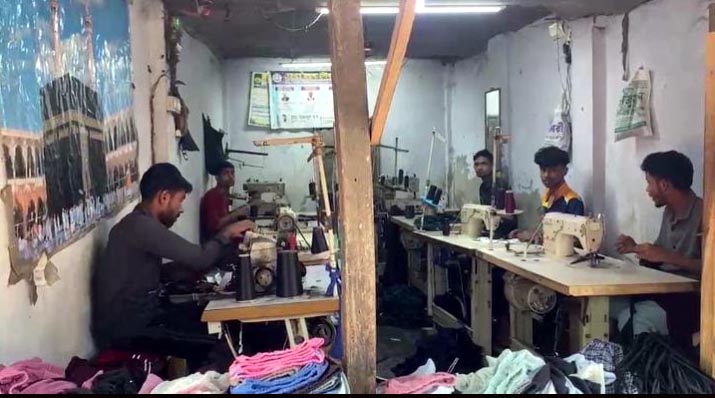
Small workshops hum with the sound of sewing machines.
Some workers cut fabric, others sew, while some add the final touches to finished garments. This is the daily routine in the mini-garment industry in the Natun Bazar area of Gauripur Municipality, Mymensingh. The garments produced here are distributed to various districts across the country. Yet artisans and small-scale entrepreneurs struggle to survive, hampered by a lack of capital, rising raw material costs, and a lack of necessary support. According to veteran local artisans, the tailoring trade in Natun Bazar was established before independence—during the Pakistani era—by a few families who migrated from Bikrampur. At one time, the area was even known as “Khalifapatti” (Tailors’ Quarter). Over time, residents learned the craft and helped the industry grow. Currently, the livelihoods of approximately 300 to 400 local families are tied to this sector. Din Islam Montu, a veteran artisan, has been involved in this trade for nearly 50 years. He explains that his uncle, Sona Mia Khalifa, along with his six brothers, arrived from Bikrampur and launched the business. Reflecting on the past, he says, “In the past, we used to bring old gowns and fabrics from Chittagong, rework them, and sell them.” “But look at the prices of goods today! Paying artisans a daily wage of 400 to 700 taka is simply not sustainable for us.” He adds with regret, “It is precisely the lack of capital that has led to this situation.”

“We produced winter clothing, but because there is no winter [cold weather] this year, we are left in tears.” Abdul Kadir, another veteran artisan who has been in the trade since before independence, recalls, “Back then, we would learn the craft under master tailors.” “After finishing our work, they would provide us with food.” “Later, during the Pakistani era, I began receiving a salary of 15 taka.” “I have been doing this work ever since—right up to the present day.” Mohammad Mizbah, a craftsman over the age of sixty, has spent the last 10 to 15 years making children’s pants and shirts out of *jhut*—the fabric scraps left over from garment factories. Meanwhile, Mohammad Abu Kalam, who has spent 26 years repairing sewing machines, notes that his workload fluctuates wildly: sometimes he is so swamped that he cannot even find time to eat, while at other times, he may go two full days without any work at all. These workshops in Notun Bazar produce a variety of garments, including pants, T-shirts, trousers, *shalwar-kamiz* sets, and winter clothing. Entrepreneurs source the raw materials from places like Dhaka, Tongi, Konabari, Mirpur, and Narayanganj. Through wholesalers, these garments are distributed to various parts of the country, including Mymensingh, Sherpur, Jamalpur, Netrokona, Kishoreganj, Sylhet, and Sunamganj.

Many women also contribute to their household income by doing sewing work from home. However, the biggest obstacle facing this promising industry is a lack of capital. Mohammad Hasan—a workshop owner and “cutting master” (pattern cutter) with nearly 30 years of experience in the trade—says, “Everything has become so expensive; it’s hard to even make a decent living.” “Because of this lack of capital, we are struggling just to support our families—it has reached a point where we might be forced to abandon the business entirely.” Another entrepreneur, Mohammad Hossain Tareq, mentions that while he wishes to expand his business, the lack of capital makes it impossible. Banks often require land deeds or other forms of collateral for loans—a requirement that many small-scale entrepreneurs are unable to meet. Craftsmen and entrepreneurs argue that if they could access collateral-free loans with favorable terms, along with training and government support, this industry could generate even more employment opportunities. When asked about this, Gouripur Upazila Executive Officer (UNO) Afia Amin Pappa remarked that these promising initiatives by the local craftspeople are a source of pride for the administration, adding that there is significant potential to develop this sector into a formal cottage industry.

She noted, “Government departments typically provide loans primarily to individuals who have completed their own training programs.” However, the government has issued directives to banks this year to provide quality loans under favorable terms. We plan to hold a meeting with bank officials and entrepreneurs to discuss how small-scale business owners can secure bank loans using only a trade license or a shop rental agreement—without requiring land deeds.

Furthermore, in the near future, we will conduct on-site inspections of the workshops—accompanied by the Upazila Youth Development and Women Affairs officers—to take necessary steps toward providing training and comprehensive support. This industry in the ‘Notun Bazar’ (New Market) of Gouripur—which originated through the efforts of a few families who migrated from Bikrampur—now serves as the livelihood for hundreds of people. The artisans, who have persevered through years of hard work and experience, remain hopeful that with the necessary support, this traditional tailoring industry will be able to make a strong comeback.
Tag :

Please Share This Post in Your Social Media

Write Your Comment

Your email address will not be published. Required fields are marked *

Save Your Email and Others Information

About Author Information
Gauripur’s Mini-Garment Industry Struggles Due to Lack of Capital

Update Time : 09:48:48 am, Saturday, 21 November 2026

Small workshops hum with the sound of sewing machines.
Some workers cut fabric, others sew, while some add the final touches to finished garments. This is the daily routine in the mini-garment industry in the Natun Bazar area of Gauripur Municipality, Mymensingh. The garments produced here are distributed to various districts across the country. Yet artisans and small-scale entrepreneurs struggle to survive, hampered by a lack of capital, rising raw material costs, and a lack of necessary support. According to veteran local artisans, the tailoring trade in Natun Bazar was established before independence—during the Pakistani era—by a few families who migrated from Bikrampur. At one time, the area was even known as “Khalifapatti” (Tailors’ Quarter). Over time, residents learned the craft and helped the industry grow. Currently, the livelihoods of approximately 300 to 400 local families are tied to this sector. Din Islam Montu, a veteran artisan, has been involved in this trade for nearly 50 years. He explains that his uncle, Sona Mia Khalifa, along with his six brothers, arrived from Bikrampur and launched the business. Reflecting on the past, he says, “In the past, we used to bring old gowns and fabrics from Chittagong, rework them, and sell them.” “But look at the prices of goods today! Paying artisans a daily wage of 400 to 700 taka is simply not sustainable for us.” He adds with regret, “It is precisely the lack of capital that has led to this situation.”

“We produced winter clothing, but because there is no winter [cold weather] this year, we are left in tears.” Abdul Kadir, another veteran artisan who has been in the trade since before independence, recalls, “Back then, we would learn the craft under master tailors.” “After finishing our work, they would provide us with food.” “Later, during the Pakistani era, I began receiving a salary of 15 taka.” “I have been doing this work ever since—right up to the present day.” Mohammad Mizbah, a craftsman over the age of sixty, has spent the last 10 to 15 years making children’s pants and shirts out of *jhut*—the fabric scraps left over from garment factories. Meanwhile, Mohammad Abu Kalam, who has spent 26 years repairing sewing machines, notes that his workload fluctuates wildly: sometimes he is so swamped that he cannot even find time to eat, while at other times, he may go two full days without any work at all. These workshops in Notun Bazar produce a variety of garments, including pants, T-shirts, trousers, *shalwar-kamiz* sets, and winter clothing. Entrepreneurs source the raw materials from places like Dhaka, Tongi, Konabari, Mirpur, and Narayanganj. Through wholesalers, these garments are distributed to various parts of the country, including Mymensingh, Sherpur, Jamalpur, Netrokona, Kishoreganj, Sylhet, and Sunamganj.

Many women also contribute to their household income by doing sewing work from home. However, the biggest obstacle facing this promising industry is a lack of capital. Mohammad Hasan—a workshop owner and “cutting master” (pattern cutter) with nearly 30 years of experience in the trade—says, “Everything has become so expensive; it’s hard to even make a decent living.” “Because of this lack of capital, we are struggling just to support our families—it has reached a point where we might be forced to abandon the business entirely.” Another entrepreneur, Mohammad Hossain Tareq, mentions that while he wishes to expand his business, the lack of capital makes it impossible. Banks often require land deeds or other forms of collateral for loans—a requirement that many small-scale entrepreneurs are unable to meet. Craftsmen and entrepreneurs argue that if they could access collateral-free loans with favorable terms, along with training and government support, this industry could generate even more employment opportunities. When asked about this, Gouripur Upazila Executive Officer (UNO) Afia Amin Pappa remarked that these promising initiatives by the local craftspeople are a source of pride for the administration, adding that there is significant potential to develop this sector into a formal cottage industry.

She noted, “Government departments typically provide loans primarily to individuals who have completed their own training programs.” However, the government has issued directives to banks this year to provide quality loans under favorable terms. We plan to hold a meeting with bank officials and entrepreneurs to discuss how small-scale business owners can secure bank loans using only a trade license or a shop rental agreement—without requiring land deeds.

Furthermore, in the near future, we will conduct on-site inspections of the workshops—accompanied by the Upazila Youth Development and Women Affairs officers—to take necessary steps toward providing training and comprehensive support. This industry in the ‘Notun Bazar’ (New Market) of Gouripur—which originated through the efforts of a few families who migrated from Bikrampur—now serves as the livelihood for hundreds of people. The artisans, who have persevered through years of hard work and experience, remain hopeful that with the necessary support, this traditional tailoring industry will be able to make a strong comeback.