Progress in Sustainable Energy and Rural Employment: Ansar-VDP and SREDA Agreement

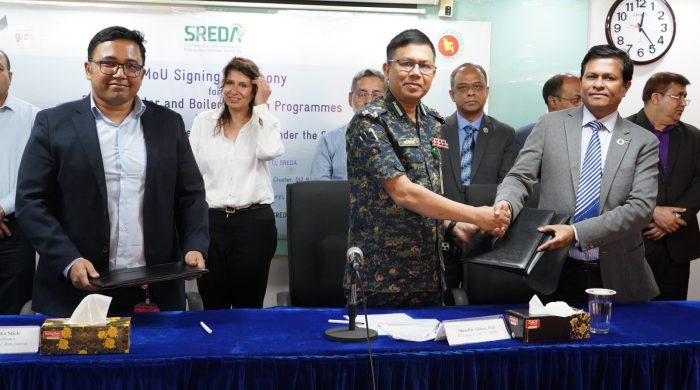
An important Memorandum of Understanding (MoU) was signed between Bangladesh Ansar and Village Defence Force and Sustainable and Renewable Energy Development Authority (SREDA) today at the SREDA Auditorium in the capital to make an effective contribution to the country’s sustainable energy development, creation of skilled human resources and development of a green economy.
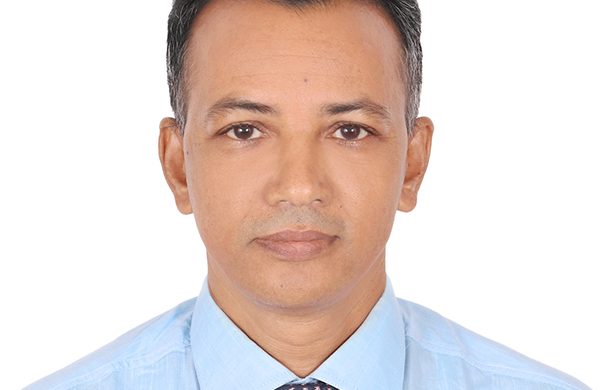
The main goal of this partnership is to increase employment and strengthen self-reliance at the rural level by expanding training in the renewable energy sector, establishing modern labs and developing skilled workers. Deputy Director General (Training) Md. Rafiqul Islam signed the MoU on behalf of Bangladesh Ansar and Village Defence Force.
SREDA Chairman Dr. Md. Mozaff Ahmed, PhD, was present as the chief guest at the event. A representative of GIZ Bangladesh was present as a special guest. The event was presided over by the National Project Director of the relevant project of Shreda.
The speakers highlighted the importance of institutional partnership in the energy transition process and said that it is possible to create skilled manpower and ensure sustainable development only through integrated initiatives.
Speaking on behalf of Bangladesh Ansar and Village Defense Force, the Deputy Director General (Training) said, “Bangladesh Ansar and VDP are proud to be partners in this timely initiative of sustainable development and energy transition.”
He mentioned that this MoU will be considered a significant milestone in transforming a large number of members spread across the country’s rural areas into skilled and productive human resources and will inject new momentum into the national development journey.
He further said that this force, which has about six million members—about half of whom are women—has been playing an important role in maintaining law and order, performing election duties and disaster management for a long time.
In addition, the force is continuously working to contribute more to the national economy by developing the skills of its members, engaging them in income-generating activities and creating employment opportunities. This MoU will provide a more coherent and institutional framework to the ongoing development program.
Under the MoU, training of trainers (ToT), pilot training programs and NSDA-approved modern labs will be established in various trades related to renewable energy and energy efficiency. Through this, it will be possible to create skilled workers in the energy sector, including solar power technicians and boiler operators.
As a result, self-employment, entrepreneurship and institutional job opportunities for the members of the force will be significantly expanded. In his speech, the Deputy Director General (Training) expressed gratitude for the visionary leadership and guidance of the Director General of the force.
He appreciated the leadership of Schrader and the initiative to create skilled manpower in the energy sector through the Skills for Sustainable Energy Solutions (Skills4SE) project.
At the same time, he mentioned the technical assistance and international cooperation of GIZ Bangladesh as important supporting forces in the successful implementation of this initiative.
He further said that Bangladesh Ansar and VDP will provide full support in providing training facilities, ensuring necessary infrastructure, selecting suitable trainees and overall coordination activities for the successful implementation of this program.
He expressed hope that the implementation of the planned program will be ensured through the concerted efforts of all the stakeholders concerned.
The Ansar-VDP authorities believe that in the future, by expanding this training program nationwide, massive employment generation, increasing the dynamism of the rural economy and ensuring climate-resilient development will be ensured.
This initiative will accelerate the country’s green growth strategy by increasing the involvement of marginalized communities, strengthening women’s empowerment and opening up new areas of skill-based employment.
It is hoped that in the long term, this partnership will have a positive impact on achieving the Sustainable Development Goals (SDGs), consolidating energy security, and promoting inclusive economic progress.