Headline :
Notice :

Fear, Shame and Silence of People Living in the Shadow of Leprosy in Satkhira-Bagerhat

Nazmul Shahadat Zakir
415 Time View
Update :
Wednesday, October 29, 2025
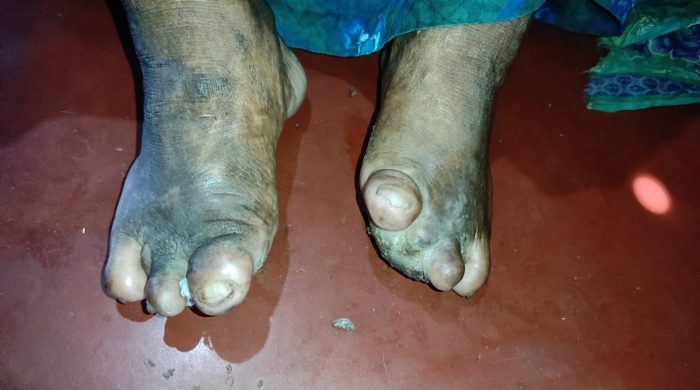
The coastal region of Bangladesh is like a frozen frame of time, where people live in a long period of fear due to salt water, poverty and the harsh gaze of society. In this region stretching from Satkhira to Bagerhat, nature is as harsh as the cruel society. Leprosy, which is completely curable today. But in these two coastal districts, it is a symbol of a curse, the name of an invisible exile.
According to government data, an average of 3-4 thousand new patients are being identified in Bangladesh every year in the last decade. Where 3,976 new patients were identified in 2015, it has decreased to 3,519 in 2024. In other words, the number of patients is showing a trend of decreasing nationally.
But the exact opposite picture is seen in Satkhira and Bagerhat.
According to data from the non-governmental organization CSS (Christian Service Society), there were only 2 patients in Satkhira in 2019, which rose to 68 in 2024. During this time, the number of patients has increased by almost 34 times. On the other hand, the situation is similar in Bagerhat; from 5 in 2019, it has reached 101 in 2024. The increase is almost 20 times. As of August 2025, 35 patients were under treatment in Satkhira and 74 in Bagerhat.
Experts say that multiple factors are working behind the increase in the risk of leprosy in this coastal region. The impact of salt water due to climate change, poverty, malnutrition and weak immunity are helping the disease spread further.
However, the real obstacle is not the disease, but the society. Although healthcare is easily available, the fear, shame and social neglect associated with leprosy for centuries are keeping many away from treatment.
The tendency not to disclose the patient’s name, and cases of stopping treatment midway are the reasons why the disease is slowly spreading in society.
Many patients in Bagerhat or Satkhira still consider leprosy a curse. Even though they know that it is possible to recover with treatment, many hide the initial symptoms of the disease for fear of social humiliation.
Health Department officials say that while the disease is decreasing across the country, it is increasing in these two districts. Why? Because leprosy is not just a medical issue here, it is a social fear that is forcing people to hide.
According to them, these two regions are now new centers for leprosy detection. Although it is not discussed like saline, diarrhea or malaria, leprosy still persists in the poverty, malnutrition and salinity of the coast, many of whom still hide because they fear being isolated from society when they go for treatment.
Fear, shame and a life of invisible walls
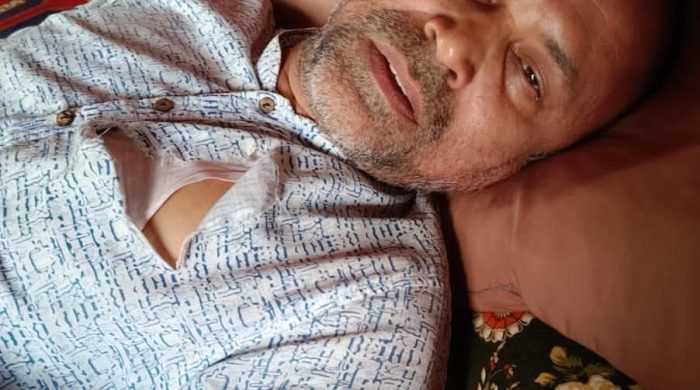
Rahima Khatun (Chand Naam) of Kukhrali village in Satkhira town is no longer alive. The day Rahima first realized that leprosy was slowly taking away her normality, her limbs were starting to weaken and deform, the invisible barriers imposed by society became greater than the physical pain of that day. The disease had taken away her body’s structure, strength and physical freedom. But the biggest loss was the label of ‘touchy’ in the eyes of society.
“The doctor said I was completely healthy. Yet people are afraid to go to my house, no one wants to go into the pond. People still say I am touchy,” Rahima says with pain.
Rahima’s story is not unique to her. Biswajit Roy of Bagerhat, who is a daily wage earner, has lost three fingers on his right hand. Treatment has started, there is no infection, but no one stands by him in the market, nor does he get work. On the other hand, Meherunnessa (Chandanam) of Satkhira city was diagnosed with leprosy a few years late. The first spot on her skin appeared three years ago. Fever, body aches – then she gradually lost feeling in her hands and feet. Even if she pinched herself, she couldn’t feel anything.
Meherunnesa said that at first no one could figure out what kind of disease it was. The local doctor said it was a skin disease. Later, I went to a doctor in India and found out that I was suffering from leprosy.
Due to the delay in catching the disease, small spots appeared on her body, and at one point, her flesh rotted. Still, she was not ashamed to seek treatment, but the neglect of society hurt her the most.
She added that her neighbors and in-laws didn’t want to eat with her. No one would go into the pond where I used to bathe. However, things have changed with time. It is not a contagious disease. It gets better with medicine. Meherunnesa claims that if the disease is caught at the right time, there is no loss of limbs.
There is treatment, but the fear is great
Leprosy is caused by a bacterium called Mycobacterium leprae. It can spread through close contact over a long period of time through droplets from the mouth and nose, but not through casual touching, eating together or shaking hands. Once treatment is started, transmission from the patient stops. However, the biggest challenge is the social aspect.
According to the World Health Organization, the biggest obstacle to eliminating leprosy is social inequality. The Bangladesh government has set a goal of eliminating leprosy by 2030, but unless this wall of fear is broken in regions like Satkhira and Bagerhat, that goal will remain elusive.
Currently, CSS (Christian Service Society), The Leprosy Mission Bangladesh and the District Civil Surgeon Office are working together to eliminate leprosy in Satkhira and Bagerhat.
CSS Project Officer Md. Khalequzzaman said in this regard, government and private initiatives are working together to eliminate leprosy. We are conducting awareness activities in every upazila of Satkhira and Bagerhat.
The organization claims that people still think that leprosy means contagious, a punishment from God. This fear keeps them away from treatment. According to them, poverty, malnutrition and social shame have kept leprosy alive. There is medicine, but there is no medicine to remove the fear.
According to the official figures, 51 patients are currently under treatment in Satkhira and 74 in Bagerhat. Health workers say that the real number is at least double that. Many keep their names secret, while some stop midway even after starting treatment.
As a result, leprosy is causing not only physical but also social suffering in the coastal areas of Satkhira and Bagerhat.
Madhav Chandra Dutta, a civic leader and development activist from Satkhira, said, “These two districts are home to poor, malnourished people, where leprosy spreads quickly due to weak immunity. Leprosy is still considered a curse or punishment in society, as a result of which patients keep treatment secret and are isolated from society. Humidity, high temperatures, cyclones, tidal waves and unsanitary shelters are increasing the infection. Early detection, free treatment, awareness raising and social inclusion are essential to control leprosy. This disease can be eradicated if community clinics, upazila health workers and local administration work together.’
In the words of Bagerhat Civil Surgeon Dr. A.S. M. Md. Mahbubul Alam, ‘The people of this region are poor. They are daily wage labourers or laborers. Many people hide out for fear that they will lose their jobs if they seek treatment. As a result, the disease spreads slowly.’
Why are these two districts moving forward? What is the solution?
Leprosy infection is increasing in the coastal areas of the country due to climate change. The leprosy germ is temperature sensitive; it is most active at 25–30 degrees Celsius and can survive for a long time in warm and humid environments, resulting in increased transmission (Central Journal of Global Health, 2021). People are being displaced due to cyclones, floods and river erosion; Unhealthy and malnourished environment is accelerating the risk of leprosy (The Leprosy Mission, 2022). Although research on this topic is limited in Bangladesh, the World Health Organization says that climate change favors the spread of the disease and it is necessary to take coordinated steps in healthcare and policy planning.
In this regard, Satkhira Civil Surgeon Md. Abdus Salam said, in areas where water salinity is high, skin diseases and nerve damage are more common. The body is weak. This is a conducive environment for leprosy. Although this disease is treatable, social stigma, ignorance and fear are the biggest enemies in the treatment of leprosy.
According to him, leprosy is no longer a disease to be feared, it is completely curable. There are trained manpower and adequate medicines in every upazila by the government. Patient identification and treatment activities are underway with the help of CSS NGO.
There are still some prejudices in the society about leprosy, for which we are conducting regular awareness seminars, yard meetings and campaign activities, so that no one is deprived of treatment due to fear or shame. Leprosy does not cause limb loss if treated. Earlier, people did not want to seek treatment due to shame and fear, but now a lot of work is being done at the field level through government and private initiatives. There is adequate stock of medicines and every patient is under regular surveillance. Our goal is to reduce the number of leprosy patients to zero by 2030.
আপনার মতামত লিখুন :
Leave a Reply
More News Of This Category