Dhaka 8:45 pm, Monday, 16 November 2026

Human Chain in Barguna Demanding Climate Justice and Sustainable Embankments

Rasel Howlader, Barguna
  • Update Time : 01:16:28 pm, Monday, 16 November 2026
  • / 1 Time View

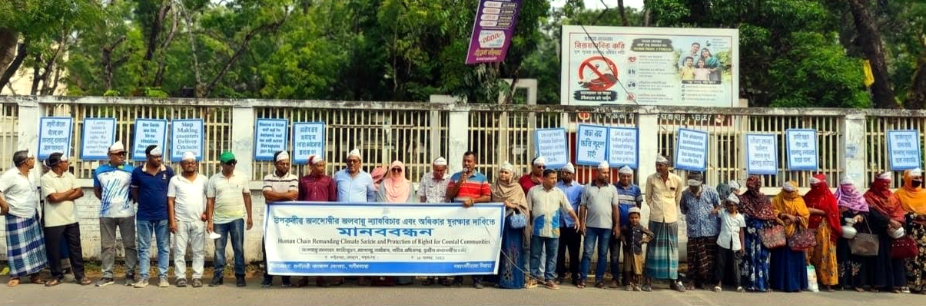
Coastal communities are being devastated by the impacts of climate change. The risks of natural disasters, river erosion, salinity intrusion, storm surges, and the loss of homes are constantly on the rise. People living along the coast are among those who suffer the most. Yet, fair compensation for affected populations—to be provided by the nations responsible for climate change—and the right to a safe life remain unassured. Against this backdrop, residents in Barguna formed a human chain to demand climate justice, compensation, the construction of sustainable embankments, and the protection of the rights of coastal communities.

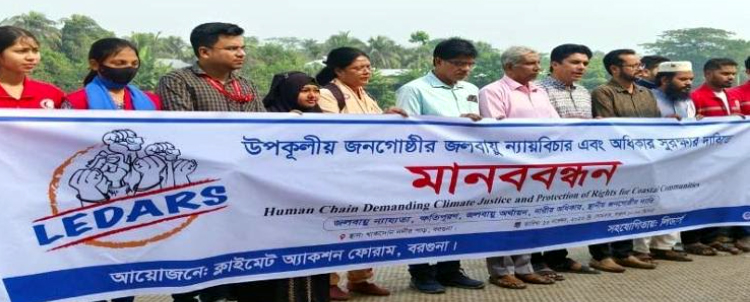
The event took place on Monday (November 16) at 10:00 AM, near the river port area along the banks of the Khakdon River in Barguna town. Organized by the Barguna District Climate Action Forum with support from the organization ‘LEADERS,’ the event saw the participation of men and women from various walks of life, including youth and representatives from social organizations. Participants held banners and signs calling for climate justice, environmental conservation, and the realization of the rights of coastal people. Those participating in the human chain pointed out that while the ordinary people of the coast are not responsible for climate change, they are the ones paying a heavy price for it.

Global warming and climate change are intensifying the frequency and severity of cyclones, storm surges, abnormal tidal surges, river erosion, and salinity intrusion in coastal regions. Agricultural land, fisheries, homes, and livelihoods are being severely damaged. Countless families are being left destitute by a succession of disasters. Women, in particular, face additional hardships—from collecting water and ensuring food security for their families to raising children and securing safety during disasters. According to them, the climate crisis is no longer merely an environmental issue; it has become a matter of survival, human rights, and the very existence of the people living along the coast. Therefore, the opinions of local communities must be prioritized when addressing the damages caused by climate change.

The participation of affected coastal populations must be ensured in development planning and the utilization of climate funds. Simultaneously, effective initiatives must be taken to secure fair compensation for affected nations and communities from the countries most responsible for climate change. Participants in the human chain raised slogans such as: “If nature survives, life survives—climate justice is the solution”; “We demand sustainable embankments and safe lives”; “A green planet is everyone’s right; no more climate injustice”; “Reduce carbon, increase greenery, and restore climate justice”; and “Stop the destruction of nature; let people rise for climate justice.”

Md. Hafizur Rahman, President of the Barguna Press Club, attended the event as the chief guest. The event was presided over by Monir Hossain Kamal, a journalist and President of the District Climate Action Forum. Speakers included Jahangir Kabir Mridha, Finance Secretary of the Barguna Press Club; Md. Boni Amin, a member of the organization ‘Tarunyer Shekor’; Md. Sajib Hossain, head of the Youth Red Crescent; Farzana Afrin Tania, a member of the same organization; and representatives from various other groups. The event was moderated by journalist Abu Jafar Saleh, General Secretary of the District Climate Action Forum. The speakers emphasized that the construction of sustainable and high-quality embankments in coastal regions is an urgent necessity.

In many areas, weak and vulnerable embankments leave communities at risk of flooding—even during normal high tides or minor natural disasters. In some places, riverbank erosion is causing the loss of homes and agricultural land. As a result, people are repeatedly forced to struggle to rebuild their homes and livelihoods. Given this situation, the speakers stressed the need to move beyond unplanned, temporary repairs. They called for long-term planning focused on constructing sustainable embankments, preventing riverbank erosion, and developing disaster-resilient infrastructure. The speakers further stated that women in coastal areas are among the populations most vulnerable to the impacts of climate change.

During disasters, the lack of safe shelter, clean water, healthcare, sanitation, and livelihood opportunities exacerbates their suffering. Therefore, it is essential to ensure the meaningful participation of women at every stage of climate adaptation and disaster management. It is also urgent to enhance women’s economic capacity, create alternative employment opportunities, and ensure access to safe water. The speakers urged that the demands, crises, and lived experiences of coastal communities be brought to the international stage at the upcoming COP-31 climate conference.

They emphasized that the voices of those affected by climate change must be given due importance in international discourse. Beyond mere promises, there must be a commitment to concrete financing for climate funds, adaptation initiatives, and addressing loss and damage. Furthermore, it is necessary to secure fair compensation from the nations responsible for climate change and to ensure that these funds are utilized in a transparent and accountable manner.

Through a human chain, a call was made for the government, relevant authorities, and the international community to take effective action to establish climate justice, protect nature and the environment, safeguard the rights of coastal communities, and ensure an environment conducive to a safe life. The speakers asserted that effective measures must be taken immediately to protect the lives and livelihoods of people in coastal regions. Failure to do so will cause the impacts of climate change to trigger even more catastrophic humanitarian and environmental crises in the future.

Tag :

Please Share This Post in Your Social Media

Write Your Comment

Your email address will not be published. Required fields are marked *

Save Your Email and Others Information

About Author Information
Human Chain in Barguna Demanding Climate Justice and Sustainable Embankments

Update Time : 01:16:28 pm, Monday, 16 November 2026

Coastal communities are being devastated by the impacts of climate change. The risks of natural disasters, river erosion, salinity intrusion, storm surges, and the loss of homes are constantly on the rise. People living along the coast are among those who suffer the most. Yet, fair compensation for affected populations—to be provided by the nations responsible for climate change—and the right to a safe life remain unassured. Against this backdrop, residents in Barguna formed a human chain to demand climate justice, compensation, the construction of sustainable embankments, and the protection of the rights of coastal communities.

The event took place on Monday (November 16) at 10:00 AM, near the river port area along the banks of the Khakdon River in Barguna town. Organized by the Barguna District Climate Action Forum with support from the organization ‘LEADERS,’ the event saw the participation of men and women from various walks of life, including youth and representatives from social organizations. Participants held banners and signs calling for climate justice, environmental conservation, and the realization of the rights of coastal people. Those participating in the human chain pointed out that while the ordinary people of the coast are not responsible for climate change, they are the ones paying a heavy price for it.

Global warming and climate change are intensifying the frequency and severity of cyclones, storm surges, abnormal tidal surges, river erosion, and salinity intrusion in coastal regions. Agricultural land, fisheries, homes, and livelihoods are being severely damaged. Countless families are being left destitute by a succession of disasters. Women, in particular, face additional hardships—from collecting water and ensuring food security for their families to raising children and securing safety during disasters. According to them, the climate crisis is no longer merely an environmental issue; it has become a matter of survival, human rights, and the very existence of the people living along the coast. Therefore, the opinions of local communities must be prioritized when addressing the damages caused by climate change.

The participation of affected coastal populations must be ensured in development planning and the utilization of climate funds. Simultaneously, effective initiatives must be taken to secure fair compensation for affected nations and communities from the countries most responsible for climate change. Participants in the human chain raised slogans such as: “If nature survives, life survives—climate justice is the solution”; “We demand sustainable embankments and safe lives”; “A green planet is everyone’s right; no more climate injustice”; “Reduce carbon, increase greenery, and restore climate justice”; and “Stop the destruction of nature; let people rise for climate justice.”

Md. Hafizur Rahman, President of the Barguna Press Club, attended the event as the chief guest. The event was presided over by Monir Hossain Kamal, a journalist and President of the District Climate Action Forum. Speakers included Jahangir Kabir Mridha, Finance Secretary of the Barguna Press Club; Md. Boni Amin, a member of the organization ‘Tarunyer Shekor’; Md. Sajib Hossain, head of the Youth Red Crescent; Farzana Afrin Tania, a member of the same organization; and representatives from various other groups. The event was moderated by journalist Abu Jafar Saleh, General Secretary of the District Climate Action Forum. The speakers emphasized that the construction of sustainable and high-quality embankments in coastal regions is an urgent necessity.

In many areas, weak and vulnerable embankments leave communities at risk of flooding—even during normal high tides or minor natural disasters. In some places, riverbank erosion is causing the loss of homes and agricultural land. As a result, people are repeatedly forced to struggle to rebuild their homes and livelihoods. Given this situation, the speakers stressed the need to move beyond unplanned, temporary repairs. They called for long-term planning focused on constructing sustainable embankments, preventing riverbank erosion, and developing disaster-resilient infrastructure. The speakers further stated that women in coastal areas are among the populations most vulnerable to the impacts of climate change.

During disasters, the lack of safe shelter, clean water, healthcare, sanitation, and livelihood opportunities exacerbates their suffering. Therefore, it is essential to ensure the meaningful participation of women at every stage of climate adaptation and disaster management. It is also urgent to enhance women’s economic capacity, create alternative employment opportunities, and ensure access to safe water. The speakers urged that the demands, crises, and lived experiences of coastal communities be brought to the international stage at the upcoming COP-31 climate conference.

They emphasized that the voices of those affected by climate change must be given due importance in international discourse. Beyond mere promises, there must be a commitment to concrete financing for climate funds, adaptation initiatives, and addressing loss and damage. Furthermore, it is necessary to secure fair compensation from the nations responsible for climate change and to ensure that these funds are utilized in a transparent and accountable manner.

Through a human chain, a call was made for the government, relevant authorities, and the international community to take effective action to establish climate justice, protect nature and the environment, safeguard the rights of coastal communities, and ensure an environment conducive to a safe life. The speakers asserted that effective measures must be taken immediately to protect the lives and livelihoods of people in coastal regions. Failure to do so will cause the impacts of climate change to trigger even more catastrophic humanitarian and environmental crises in the future.